A business can receive thousands of website visits and still struggle to generate enquiries. Another may have a smaller audience but consistently turn that audience into customers. The difference often comes down to how marketing money is spent and measured.
That is the practical value of performance marketing. Instead of treating reach, impressions, or website visits as the final goal, businesses can connect campaigns with actions that actually matter-an enquiry, registration, appointment, download or purchase. In 2026, this matters even more because customers rarely make decisions after seeing a brand only once.
Why Marketing Results Matter More Than Reach
For years, businesses have been told that more visibility means more opportunities. There is some truth in that, but visibility without action has limited value.
Imagine spending ₹50,000 on two campaigns. One attracts a large number of visitors but generates almost no genuine enquiries. The other attracts fewer visitors but produces several paying customers.
Which campaign would you continue funding?
That is the kind of question a results-led approach helps answer.
Businesses can look beyond surface-level numbers and understand where leads come from, what it costs to acquire them, and which campaigns actually contribute to revenue.
Good performance marketing strategies therefore begin with a simple idea: measure what matters to the business, not just what looks impressive in a report.
When that information is tracked properly, improving marketing performance becomes less about guesswork and more about making informed decisions.
1. Google Search Ads: Be There When Customers Are Looking
Search advertising has one major advantage: timing.
A person searching “office interior designers”, “CRM software for startups” or “dentist open today” is already showing interest in a solution. The advertiser does not have to create that need from scratch.
Google Search Ads allow businesses to appear during that moment of intent.
However, simply bidding on popular keywords is not enough. The search query, advertisement, offer, and landing page should feel like parts of the same conversation.
If someone searches for an affordable service and lands on a page promoting a premium package with no explanation, the click may be lost.
Among the available paid marketing channels, search advertising is particularly useful when customers already know what they want and are actively comparing their options.
2. Paid Social: Find Customers Earlier in Their Journey
People do not open Instagram or LinkedIn because they want to see advertisements. They open these platforms to browse, learn, connect, or be entertained.
That changes how advertising needs to work.
Rather than waiting for someone to search, social campaigns can introduce a useful product, service, or idea to the right audience earlier.
This is why paid social can become one of the strongest lead generation channels for businesses that need to create interest before capturing demand.
The creative often decides whether the campaign gets noticed.
A polished advertisement is not automatically a persuasive one. Sometimes a simple customer story, product demonstration, before-and-after comparison, or direct explanation of a problem can perform better than an expensive-looking design.
Successful performance marketing strategies keep testing those possibilities instead of assuming the first creative idea will be the best one.
3. Retargeting: Continue a Conversation That Already Started
Think about your own online behaviour.
You visit a website, check a service, perhaps look at the price, and then leave. It does not necessarily mean you are uninterested. You might want to compare alternatives or simply need more time.
Your customers behave the same way.
Retargeting gives a business another chance to reach people who have already shown some level of interest.
Someone who spent time reading about one particular service should ideally see a message connected to that interest. Showing the same generic advertisement to every previous visitor misses that opportunity.
Well-planned performance marketing ads can remind people why they visited without making the experience feel repetitive.
Because these audiences are already familiar with the business, retargeting can also contribute positively to overall marketing performance when it is used with sensible frequency and messaging.
4. Affiliate Marketing: Let the Right Partners Introduce You
Sometimes the fastest way to reach a new customer is through someone they already pay attention to.
That is where affiliate marketing can help.
A publisher, creator, review website, niche blogger, or industry partner recommends a product or service and earns a commission when an agreed result occurs.
A large affiliate with an unrelated audience may generate plenty of clicks and very few customers. A smaller partner whose audience closely matches your ideal customer can be far more valuable.
Businesses should therefore evaluate affiliates using customer quality, completed sales, repeat purchases, and profitability-not traffic alone.
5. Display Advertising: Stay Familiar Without Becoming Annoying
Display advertising often receives mixed reactions because almost everyone has experienced poorly targeted banner ads.
But the channel itself is not necessarily the problem. Execution is.
Display campaigns can help businesses stay visible while customers move between websites and continue researching their options.
This can be useful when a buying decision takes days or weeks rather than minutes.
The challenge is controlling where ads appear and how often people see them.
Repeatedly showing the same banner to the same person is unlikely to build trust. Changing messages based on audience interest and buying stage creates a much more useful experience.
6. YouTube and Video Ads: Show Instead of Simply Telling
Some offers make sense immediately. Others need a little explanation.
Video gives businesses that extra space.
A software company can show the product interface instead of describing every feature. A home improvement company can show a completed project. A professional service provider can answer a question customers repeatedly ask.
This makes video useful for both education and conversion.
The opening matters enormously. People decide quickly whether to continue watching, so performance marketing ads created for video should introduce the problem or value early rather than spending too long on branding.
A viewer who watches a meaningful portion of the video can also become part of a more relevant remarketing audience later.
7. Native Advertising: Give People a Reason to Learn More
Sometimes asking for a sale immediately is simply too early.
Consider a customer researching business insurance, investment software, healthcare services, or an expensive B2B solution. They may need to understand the subject before they are comfortable speaking with a company.
Native advertising can support that stage of the journey.
Instead of sending people straight to a “Buy Now” or “Contact Us” page, a campaign might promote a useful guide, comparison, explanation, or case study.
That makes native advertising one of the practical lead generation channels for businesses where education plays an important role in the buying decision.
The initial goal is not always to sell. Sometimes it is simply to answer the next question in the customer’s mind.
8. Marketplace Ads: Meet Shoppers Close to Purchase
Marketplace advertising works in a very different environment from social advertising.
Someone casually watching short videos may have no intention of purchasing anything. Someone comparing three similar products on an online marketplace is much closer to making a decision.
That buying intent makes marketplace campaigns valuable paid marketing channels for many e-commerce businesses.
But advertising is only one part of the sale.
Suppose an ad successfully brings someone to a product listing. The shopper then finds unclear photographs, weak reviews, expensive delivery, or an incomplete description. Advertising did its job; the product page did not.
For this reason, marketplace campaigns should be evaluated alongside pricing, reviews, stock availability, listing quality, margins, and final profitability.
Which Channel Should Your Business Choose?
A local service business may see excellent results from search because customers actively look for that service. A new consumer brand may need social and video to create awareness before people begin searching for it.
A high-value B2B company may need several interactions before receiving a serious enquiry.
Start with the customer rather than the platform.
Where do people discover businesses like yours? What questions do they ask before buying? How long does the decision usually take? What prevents them from converting?
Those answers can help you decide where the first marketing budget should go.
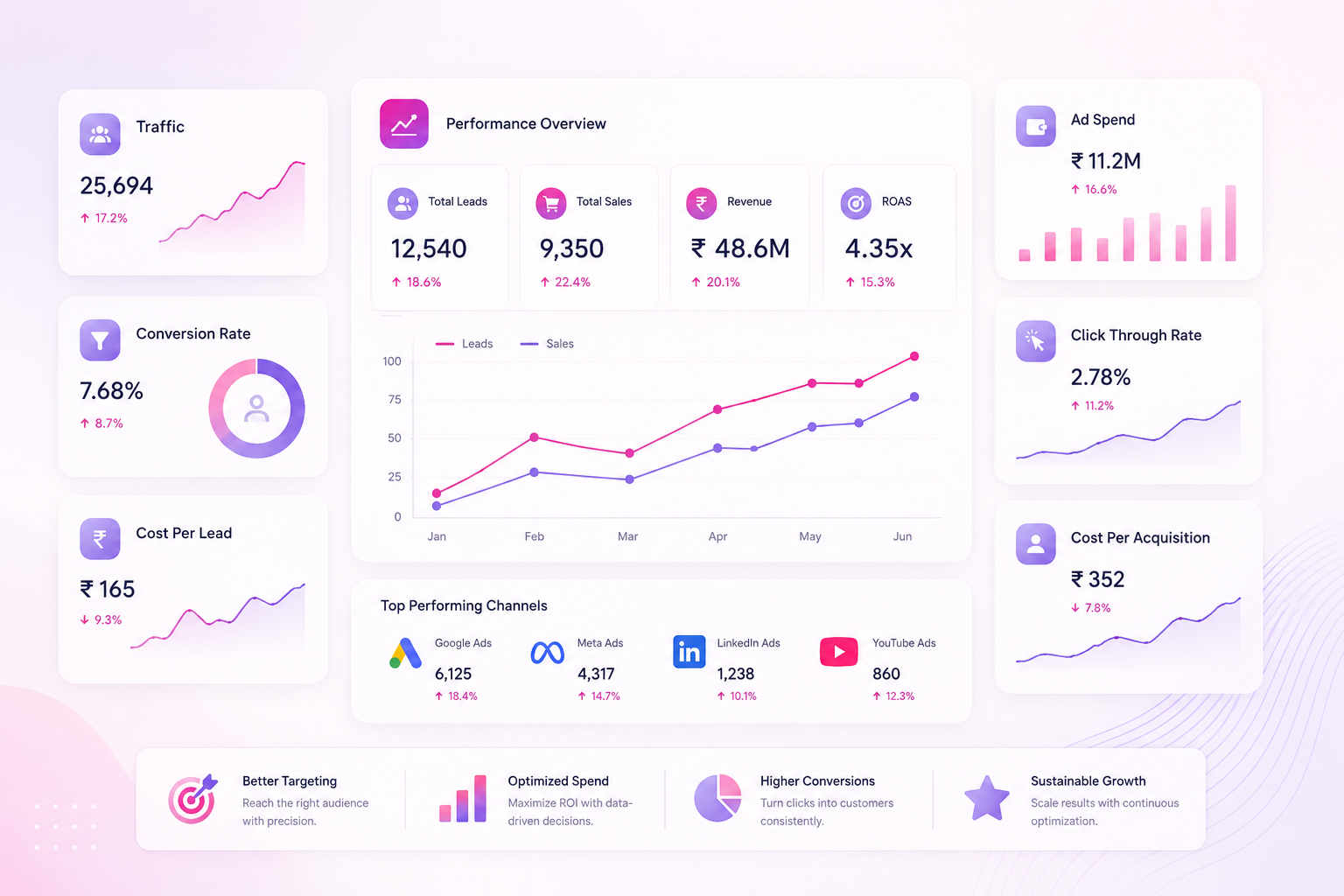
After campaigns begin generating data, compare customer quality and acquisition cost with revenue. That provides a more useful view of marketing performance than looking at traffic alone.
More Budget Doesn't Always Mean More Sales
When a campaign stops growing, increasing the budget can seem like the obvious solution.
It is not always the right one.
The real problem could be a confusing landing page, an unattractive offer, slow page speed, weak targeting, or a form asking for too much information.
Before increasing spend, check the entire journey from advertisement to conversion.
A useful campaign review might include:
- Which searches are producing genuine enquiries?
- Which audiences eventually become customers?
- Which audiences eventually become customers?
- Where are visitors leaving the landing page?
- Which creatives have become repetitive?
- Are sales teams receiving qualified leads?
- Is the offer clear within a few seconds?
- Which campaigns deserve additional budget?
Small improvements at these points can sometimes produce a bigger difference than simply buying more traffic.
Not All Leads Are Quality Leads
A campaign generating ₹250 leads may appear better than one generating ₹500 leads.
But cost per lead tells only part of the story.
If ten ₹250 leads produce no customers while three ₹500 leads produce two sales, the more expensive campaign may actually be the better investment.
This is why lead quality should always be connected to sales data.
The same principle applies to audience targeting. New visitors, returning visitors, previous customers, and people comparing prices are at different stages. Showing all of them the same message can weaken results.
Reliable tracking helps businesses see those differences and understand their real marketing performance.
Frequently Asked Questions
What is performance marketing?
Performance marketing is an approach where digital campaigns are evaluated using measurable actions such as enquiries, purchases, registrations, bookings, downloads, or other defined business outcomes.
Can small businesses use performance marketing ads?
Yes. Small businesses can use performance marketing ads with controlled budgets, test specific audiences, measure responses, and increase spending gradually when campaigns begin producing worthwhile results.
Which lead generation channels should I start with?
The best lead generation channels depend on customer behaviour. Search can be useful when people already want the service, while social media and video may work better when a business first needs to create awareness or interest.
How should I compare paid marketing channels?
When comparing paid marketing channels, avoid judging them only by clicks. Look at qualified enquiries, customer acquisition cost, conversion rate, completed sales, and the revenue each channel ultimately contributes.
What makes performance marketing strategies successful?
Useful performance marketing strategies combine accurate measurement with a strong offer, relevant targeting, persuasive creative, a simple conversion journey, and regular testing based on real campaign results.
Where Should Businesses Focus in 2026?
The goal for 2026 should not be to advertise on every available platform.
It should be to understand which combination of channels fits the way your customers actually make decisions.
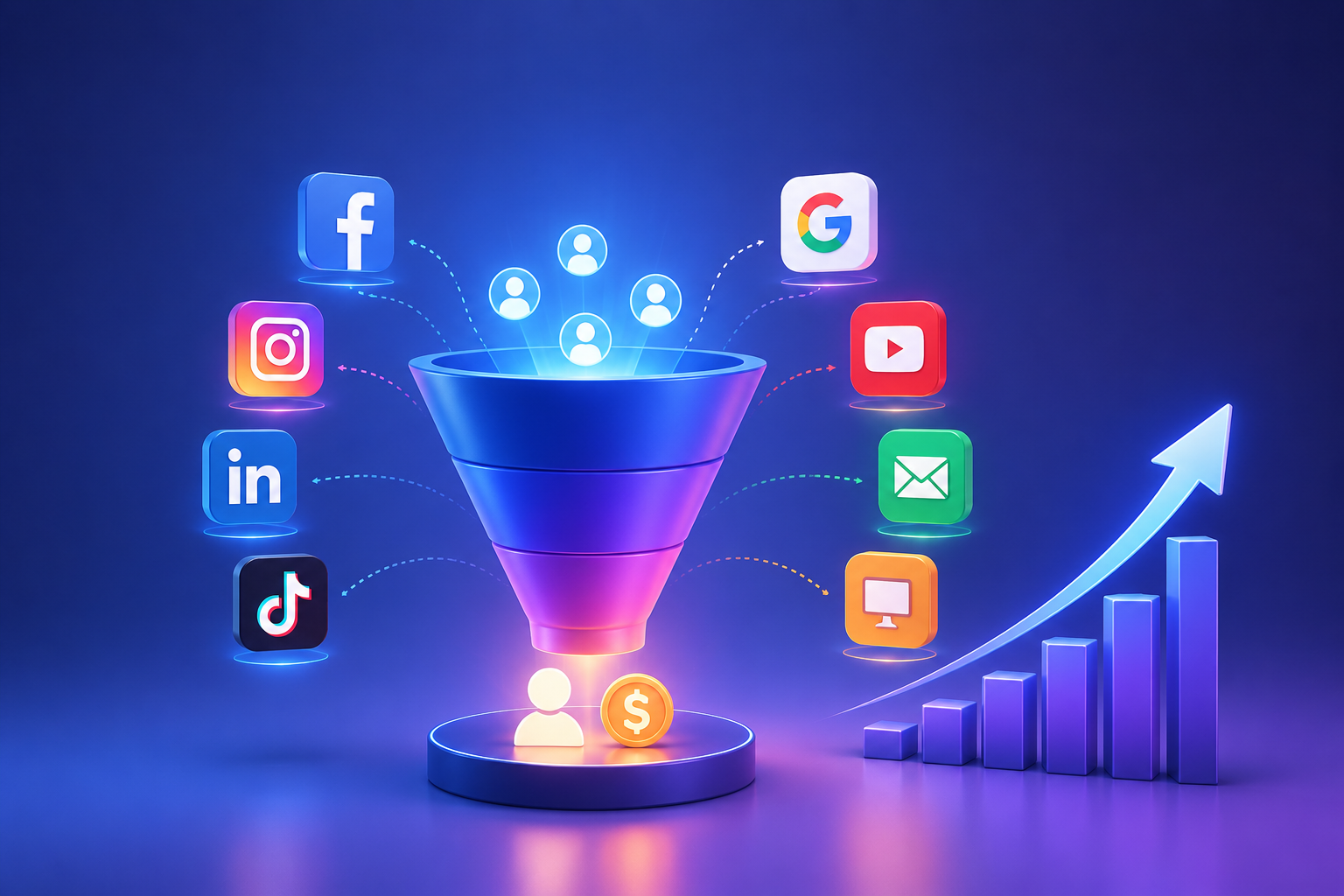
A thoughtful performance marketing plan may use search to capture existing demand, social media to introduce the business, video to explain the offer, and retargeting to reconnect with people who need more time.
The platforms will continue to change. Advertising features will change too. What remains important is understanding why someone becomes interested, what makes them hesitate, and what finally gives them enough confidence to act.
Businesses that keep learning from those signals can spend more deliberately, attract stronger leads, and turn marketing into something more useful than a collection of clicks and impressions.