Digital advertising helps businesses connect with potential customers, increase brand visibility, generate leads, and improve sales. However, choosing the right platform requires understanding how customers discover products and make purchasing decisions. Comparing Meta ads vs google ads helps businesses select an advertising strategy that aligns with their goals, target audience, and available budget.
Google Ads helps businesses reach people actively searching for products, services, or solutions. Meta Ads allows businesses to introduce their offerings to relevant audiences through Facebook and Instagram. While Google advertising captures existing customer demand, Meta advertising helps create interest and build brand awareness. Understanding these differences allows businesses to choose the right platform or combine both for better marketing results.
What Are Google Ads?
Google Ads is an online advertising platform that helps businesses promote products and services through Google Search and other advertising placements. It connects companies with potential customers searching for relevant information, products, or services.
For example, someone searching for “SEO services in Hyderabad” may see advertisements from digital marketing agencies. Businesses can use relevant keywords, location settings, and campaign options to reach interested customers.
Google Ads offers various campaign formats, including Search, Display, Shopping, and Video advertising, to support different marketing goals. Understanding Google ads vs facebook ads helps businesses select suitable platforms based on customer intent and campaign objectives. The Benefits of google ads include reaching active searchers, tracking conversions, and managing budgets. The Benefits of facebook ads include increasing brand awareness, showcasing products visually, and engaging audiences. When comparing Advertising on facebook vs google, businesses should consider lead quality, conversion rates, acquisition costs, and campaign performance.
The key features of Google Ads include:
- Keyword targeting: Reach people searching for relevant products and services.
- Location targeting: Show advertisements to audiences in selected geographical areas.
- Conversion tracking: Measure enquiries, purchases, calls, and other valuable actions.
- Budget management: Set advertising budgets and adjust spending according to campaign performance.
- Campaign flexibility: Select suitable advertising formats based on business objectives.
Google Ads is particularly useful for businesses that want to attract customers who already have a specific requirement and are looking for a suitable solution.
What Are Meta Ads?
Meta Ads enables businesses to promote their products and services across Facebook and Instagram. Businesses can use visual content to showcase their offerings, highlight benefits, and encourage customers to take action.
Unlike Google Search advertising, Meta Ads can reach people based on demographics, interests, behaviours, and locations. Understanding Google ads vs facebook ads helps businesses identify the right platform for reaching potential customers, even when they are not actively searching for products or services.
For example, real estate companies can use Instagram Reels to showcase property features, amenities, and locations, while clothing businesses can use carousel advertisements to display multiple products. The Benefits of google ads include reaching customers with specific search intent, while the Benefits of facebook ads include building brand awareness, showcasing products, and encouraging engagement.
When comparing Advertising on facebook vs google, businesses should consider their marketing objectives, target audience, and advertising budget. Meta Ads is particularly useful for introducing new products, increasing brand visibility, generating leads, and building relationships with potential customers.
Meta ads vs Google ads: Understanding the Main Differences
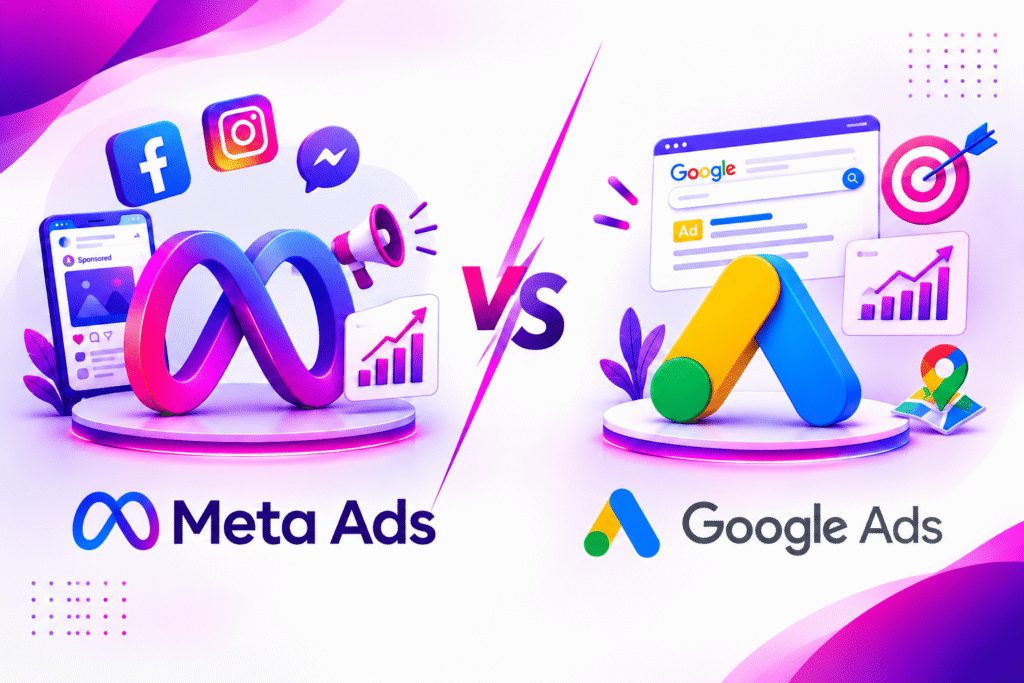
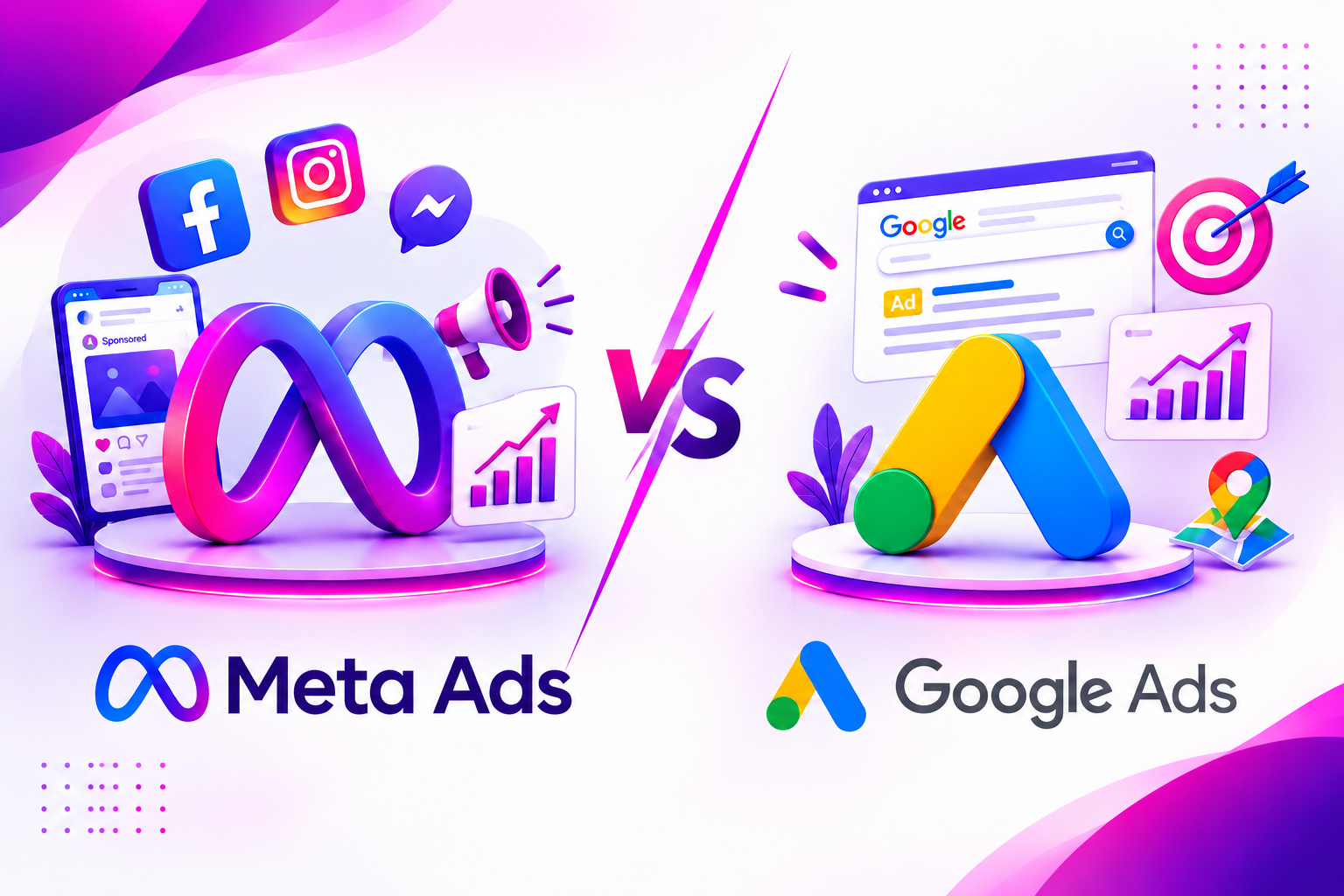
Understanding Meta ads vs Google ads helps businesses identify which advertising platform suits their marketing strategy.
Primary Focus: Google Ads focuses on search intent and conversions, while Meta Ads focuses on brand awareness, engagement, and conversions.
Audience Targeting: Google Ads uses keywords, locations, and audience signals. Meta Ads targets audiences based on demographics, interests, locations, and other available options.
Customer Behaviour: Google Ads reaches users actively searching for solutions, whereas Meta Ads reaches users based on their interests and audience characteristics.
Advertising Formats: Google Ads offers Search, Display, Shopping, and Video ads. Meta Ads supports images, videos, carousels, Stories, and Reels.
Ad Placements: Google Ads appears on Google Search and other Google advertising placements, while Meta Ads appears on Facebook, Instagram, and other Meta placements.
Common Objectives: Google Ads helps generate leads, purchases, calls, and website traffic. Meta Ads supports brand awareness, engagement, lead generation, and purchases.
Performance Measurement: Google Ads measures clicks, conversions, conversion value, and costs. Meta Ads measures reach, engagement, clicks, conversions, and costs.
Both platforms offer tools to measure advertising performance. However, businesses should not evaluate success only through impressions or clicks. Qualified leads, conversion rates, customer acquisition costs, and revenue provide a clearer understanding of campaign effectiveness.
Audience Targeting and Customer Intent
Google Ads allows businesses to reach people searching for specific products or services. Meta Ads helps businesses discover potential customers through audience targeting and engaging content.
For example, someone searching for a dental clinic may already need treatment. Meanwhile, a person browsing Instagram may discover a dental clinic through an informative video. These different customer behaviours influence how businesses should design their advertising campaigns.
Advertising Formats and Placements
Google Ads supports search-based advertisements and other formats designed to reach audiences across different placements. Meta Ads focuses heavily on visual formats that help businesses demonstrate their products and communicate their value.
The right format depends on the campaign objective, audience preferences, and type of product or service being promoted.
Benefits of Google Ads
The Benefits of google ads include reaching customers with specific requirements, generating enquiries, measuring conversions, and managing advertising expenditure.
1. Reach Customers with High Intent
Google Search advertising helps businesses connect with people actively looking for relevant solutions. By selecting appropriate keywords, businesses can make their services visible when potential customers search for them.
This approach can benefit local service providers, educational institutions, healthcare businesses, and digital marketing agencies.
2. Generate Leads and Sales
Businesses can direct interested users to relevant landing pages where they can submit enquiry forms, make calls, or purchase products. Clear advertisements and useful website content can improve the chances of conversion.
However, results depend on keyword relevance, competition, landing-page quality, and the overall customer experience.
3. Track and Improve Campaign Performance
Google Ads provides performance data that helps businesses evaluate keywords, advertisements, conversions, and advertising costs. Companies can use these insights to identify effective campaigns and make informed adjustments.
4. Control Advertising Budgets
Businesses can establish budgets according to their marketing requirements and monitor campaign expenditure. Regular performance reviews help companies identify opportunities to improve efficiency and allocate spending towards campaigns that generate valuable results.
Benefits of Facebook Ads
The Benefits of facebook ads include increasing brand awareness, presenting products visually, engaging relevant audiences, and generating potential customer enquiries.
1. Increase Brand Awareness
Facebook and Instagram advertisements introduce businesses to audiences who may not have previously encountered their products or services. Relevant creatives and consistent messaging can help improve brand recognition.
2. Showcase Products and Services
Visual advertising allows businesses to demonstrate product features, explain benefits, and communicate their unique value proposition.
For example, real estate companies can publish property walkthrough videos, while clothing brands can use carousel advertisements to display different designs and collections.
3. Reach Relevant Audiences
Meta Ads offers audience targeting options that help businesses connect with people based on available interests, demographics, and locations. Businesses can use these options to promote relevant offerings and direct interested users to their websites or social media profiles.
4. Encourage Engagement and Generate Leads
Businesses can experiment with different images, videos, headlines, and calls to action to understand which advertisements attract attention. Lead forms and suitable enquiry options can make it easier for interested customers to contact a business.
Campaign results should be reviewed regularly to understand which audiences and creatives generate the most valuable leads.
Advertising on Facebook vs Google: Which Is More Cost Effective?
When comparing Advertising on facebook vs google, businesses should consider the value generated by their advertising expenditure rather than focusing only on click costs.
The cost effectiveness of either platform depends on industry competition, campaign objectives, audience quality, conversion rates, and customer acquisition costs.
Businesses should evaluate the following metrics:
- Cost per click (CPC): The average cost paid for an advertisement click.
- Cost per lead (CPL): The amount spent to generate a potential customer enquiry.
- Conversion rate (CR): The percentage of users who complete a desired action.
- Customer acquisition cost (CAC): The cost of acquiring a paying customer.
- Return on ad spend (ROAS): The revenue generated for each unit of advertising expenditure.
For example, Meta Ads may generate a larger number of enquiries, but Google Ads may attract customers who are closer to making a purchase. The opposite may also happen, depending on the business and campaign.
Therefore, businesses should compare lead quality, completed sales, revenue, and profitability before deciding which platform provides better value.
Facebook Ads vs Google Ads: Which Is Better for Your Business?
When Should You Choose Google Ads?
Google Ads may be suitable when:- Customers actively search for your products or services.
- Your business wants to generate enquiries, calls, or website conversions.
- Your offering solves a specific customer problem.
- Relevant search demand exists.
- Your website and landing pages are designed to encourage action.
When Should You Choose Meta Ads?
Meta Ads may be suitable when:- You want to introduce a new product or service.
- Your offering can be demonstrated through images or videos.
- Building brand awareness is a priority.
- You want to reach relevant audience groups.
- You want to encourage engagement and generate enquiries.
Can You Run Google Ads and Meta Ads Together?
Yes. Businesses can combine Google Ads and Meta Ads to reach potential customers at different stages of their purchasing journey.
Google Ads can help capture existing demand by reaching people searching for specific products or services. Meta Ads can introduce the business to new audiences, demonstrate its offerings, and maintain engagement.
For example, a digital marketing agency can use Google Search campaigns to attract businesses searching for SEO services. At the same time, it can use Meta Ads to promote educational videos, client success stories, and marketing tips.
Before launching campaigns, businesses should define their objectives, allocate appropriate budgets, and configure conversion tracking. They should also review campaign performance regularly and focus on generating qualified leads and profitable sales rather than simply increasing traffic.
Why Choose Aivolv for Your Digital Advertising Needs?
Aivolv is an AI powered digital marketing agency that helps businesses strengthen their online marketing activities. Understanding Meta ads vs google ads and Google ads vs facebook ads helps businesses evaluate customer intent, audience characteristics, competition, and business objectives before choosing an advertising platform.
Aivolv can help businesses identify suitable advertising strategies, understand the Benefits of google ads and Benefits of facebook ads, develop relevant ad creatives, create compelling calls to action, and improve landing-page experiences. Effective conversion tracking helps businesses understand how advertising campaigns contribute to enquiries and sales.
When comparing Advertising on facebook vs google, businesses can analyse campaign performance to identify opportunities to improve targeting, creative content, budget allocation, and lead quality. A structured advertising strategy helps align marketing expenditure with business goals and supports ongoing optimisation.