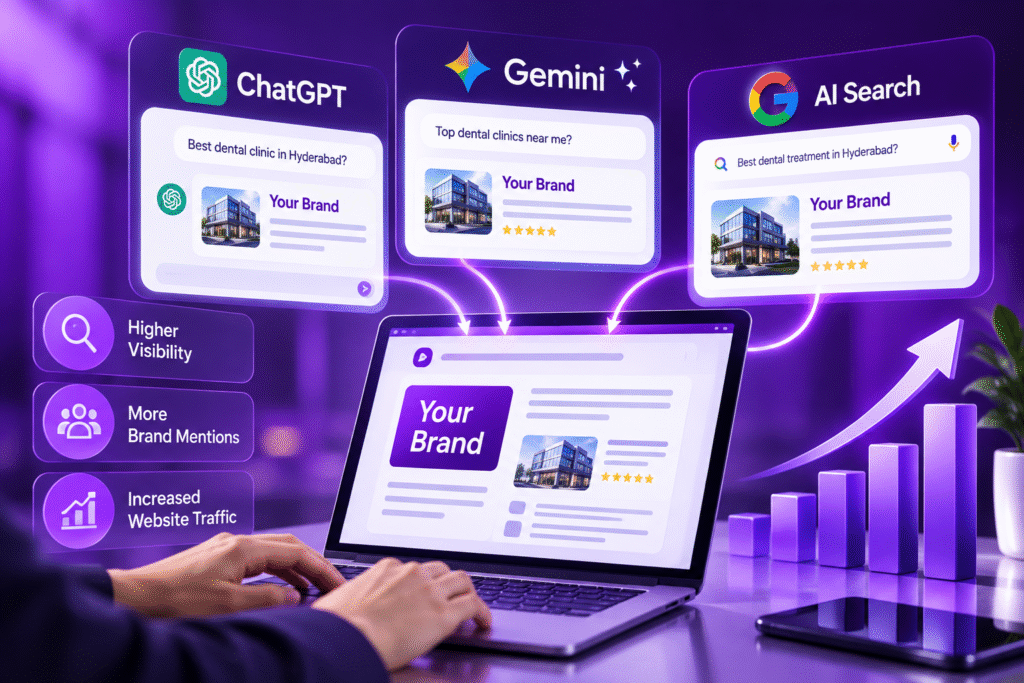
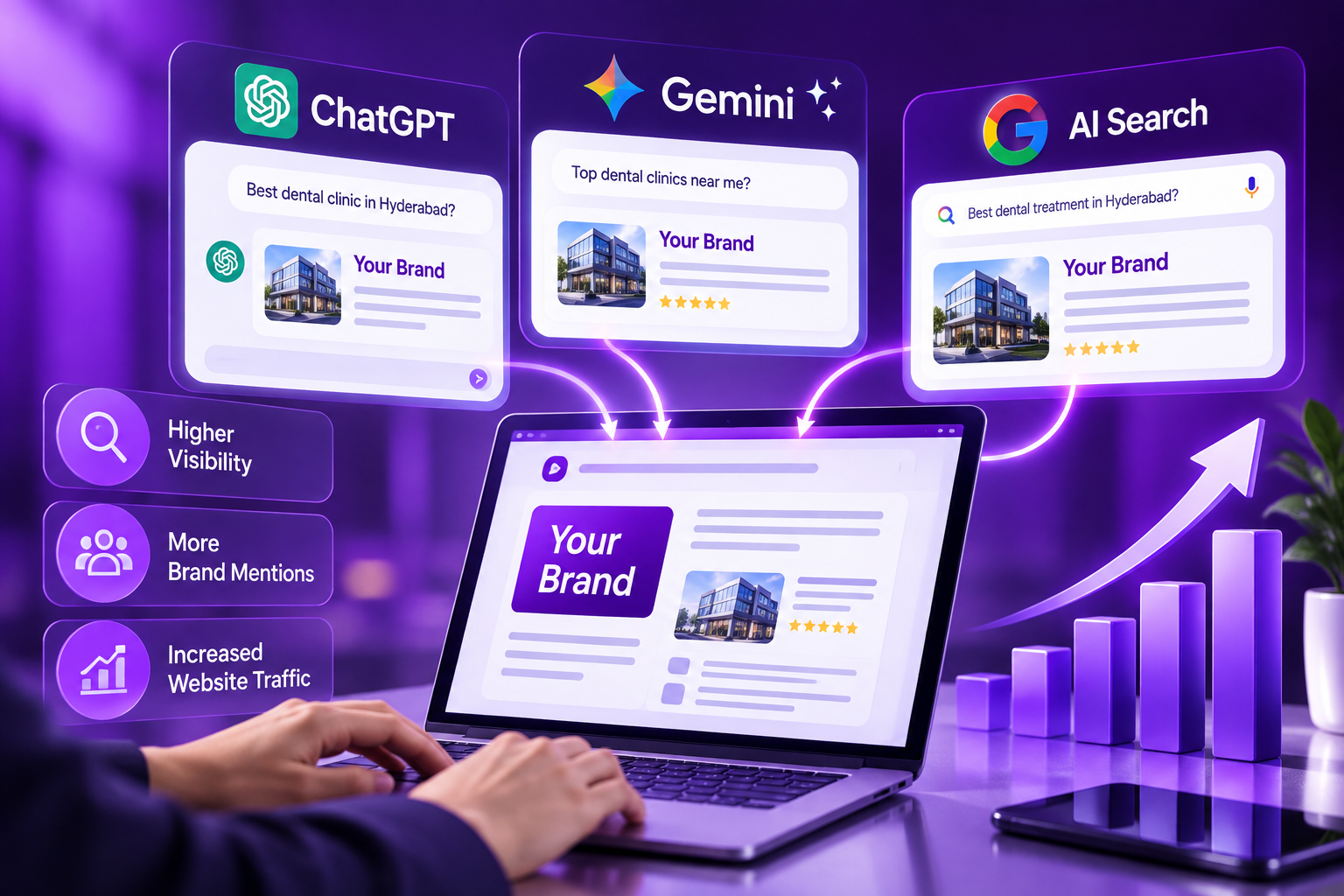
Make Your Website Easy to Understand for AI Search
- A clear overview of your business
- Separate pages for major services or products
- Information about the audiences you support
- Details about locations and service areas
-
Contact information and business credentials
- Helpful explanations for common customer concerns
A well-organized site also gives search systems more useful material to interpret. AI search systems can better understand your business when your website provides clear, relevant information. Instead of relying on a single page to describe everything, build a connected website where each important topic has a suitable place.Create Content Based on Customer Questions for AI Search
People often search by describing a problem rather than naming a company. Your content can address that behavior by answering practical questions related to your industry. This approach can also support your AI search strategy by helping search systems understand how your content addresses customer needs.
For example, a marketing company could publish articles about:
Choosing a service for a specific business goal
Comparing two marketing approaches
Understanding factors that influence campaign costs
Preparing for a website redesign
Measuring progress after a campaign
Common mistakes made when selecting an agency
This approach gives your website a broader range of useful subjects. It also helps your brand become associated with the topics that matter to potential customers.
When planning articles, think about the conversations your sales team has with prospects. Questions that repeatedly appear during calls, emails, or consultations can become strong content topics. Addressing these questions clearly can make your content more relevant to AI search systems and potential customers seeking practical answers.
Show Evidence of Your Expertise
Useful information becomes more convincing when readers can see why your business is qualified to provide it. Add practical evidence throughout your website instead of making broad claims without support. You can strengthen your presentation through:- Author or team information
- Case studies and project examples
- Original research or observations
- Detailed service explanations
- Customer experiences
- Industry specific insights
Understand Google Generative AI
Google’s conversational search features are changing how people discover information. Google generative AI can present synthesized information rather than relying only on a traditional list of blue links.
For businesses, this means the information published on a website should be useful enough to support a broader understanding of the company. Service descriptions, educational articles, business profiles, and independent mentions can all contribute to the picture surrounding a brand.A practical content plan should therefore cover both commercial pages and educational resources. A service page can explain what you offer, while supporting articles can answer questions customers may have before making a decision.
Keep Business Details Consistent
Conflicting information can make a brand harder to understand. Check important details across your website, business profiles, directories, social accounts, and industry listings. Pay particular attention to:- Business name
- Address or service area
- Contact details
- Website address
- Main services
- Opening information where relevant
- Company descriptions
Earn Mentions From Relevant Sources
Your website is only one component of your company’s wider online presence. Information published by industry publications, professional organizations, business directories, partners, and other relevant websites can add context around your company.
Instead of pursuing mentions from unrelated websites, concentrate on sources that have a meaningful connection to your industry. A specialist publication, professional association, or trusted local directory can provide more useful context than a collection of unrelated pages.
Consider opportunities such as:
- Industry interviews
- Local business directories
- Partner or supplier pages
- Relevant news coverage
- Specialist publications
The goal is to develop an online presence that accurately represents your company. Relevant external references can also strengthen recognition when different systems collect information about your business.
Work With the Microsoft Search Ecosystem
Microsoft’s search environment also includes conversational experiences that can respond to detailed questions. The Bing AI chatbot can be relevant when users are looking for recommendations, explanations, or information about businesses. Businesses should review how their company appears across Microsoft related search properties and keep important details dependable. This can help the Bing AI chatbot find consistent information about the business when responding to user queries. Check business profiles, service descriptions, contact information, and other public references for outdated or conflicting details. Useful steps include:- Reviewing your business listing information
- Keeping service descriptions current
- Checking important contact details
- Publishing helpful material on your own website
- Looking for inaccurate references that need correction
Prepare for the AI Chatbot Google Experience
Google users are increasingly encountering conversational ways to explore information. The phrase AI chatbot Google is often used when discussing Google’s AI powered search and conversational experiences. This shift makes question focused content increasingly useful. Instead of writing only for short search terms, consider how someone might phrase a complete request to an AI chatbot Google. For example, a customer could ask:- Which marketing service is suitable for a small company?
- What should I check before hiring an agency?
- How can a business improve its online visibility?
- What should I include in a digital marketing plan?
Make Information Useful for an Artificial Intelligence Search Engine
An Artificial intelligence search engine can evaluate information differently from a conventional keyword matching system. The subject, relationships between concepts, and usefulness of the material can all influence how information is interpreted.
This makes it important to write naturally. When creating content for an Artificial intelligence search engine, avoid pages that repeat the same phrase in every heading and paragraph. Instead, explain the subject fully and use related terminology where it genuinely fits.
For example, a page about website development could discuss planning, design, mobile usability, technical performance, content structure, maintenance, and conversion goals. Each topic adds meaning without requiring the same keyword to appear repeatedly. Creating clear, relevant and well structured content can help an Artificial intelligence search engine better understand the page’s subject and context.
Write for Conversational Queries
The Bing AI chatbot is one example of why conversational content deserves attention. People may describe their situation in a full sentence instead of entering a short keyword. Content that answers complete questions can therefore be easier for readers to use across different search experiences.
Try creating sections such as:
- What should a business consider before choosing a service?
- Which option works better for a particular situation?
- What information is needed before starting a project?
- What common problems should customers avoid?
- How can a company evaluate different providers?
Answers should be specific and easy to follow. Avoid padding a page with generic statements simply to make it longer.
Build Strong Topic Associations
A recognizable subject area can help your business become easier to understand online. If a company specializes in several related services, create a connected group of pages that covers those areas from different useful angles. For example, a digital marketing company might publish material about SEO, paid advertising, social media, content strategy, analytics, and website optimization. These subjects can be connected through internal links and supporting articles. The objective is not to publish dozens of thin pages. A smaller collection of detailed resources can be more useful when every page serves a clear purpose.Publish Information That Adds Something New
Repeating common advice rarely gives readers a reason to choose your website. Try to include information that comes from your own experience, projects, research, or observations. Original material could include:- Results from your own projects
- Industry observations
- Internal processes explained clearly
- Data collected from your customers
- Before and after examples
- Practical checklists based on real work
Create Helpful Comparison Pages
Comparison content can be valuable when customers are deciding between services, products, or approaches. Explain the differences fairly and identify situations where each option may make sense.
For example, an article could compare two website development approaches, different advertising models, or alternative SEO strategies. Include factors such as cost considerations, complexity, maintenance, expected use cases, and business requirements.
Balanced comparisons are more useful than pages designed only to promote one option. They can also demonstrate that your business understands the wider market.Encourage Genuine Customer Reviews
Reviews can provide another source of information about a company. Encourage customers to describe their actual experience rather than asking for scripted comments. Useful reviews may mention:- The service received
- The problem addressed
- Communication quality
- Project experience
- Support after delivery
- Specific outcomes noticed by the customer
Check How Your Brand Appears in AI Answers
Search your company name and important service topics through several AI platforms. The purpose is not to chase a particular wording but to understand how your business is represented. Record questions such as:- Is the company recognized for the right services?
- Are important business details accurate?
- Which sources appear to influence the answer?
- Are competitors being mentioned for topics you also cover?
- Is any outdated information appearing?
Improve Pages That Leave Questions Unanswered
When a page receives visitors but does not explain an important part of the customer’s decision, expand it with useful detail.
A service page might need information about the process, suitable use cases, preparation, timelines, limitations, or frequently asked questions. A product page may need clearer specifications, comparisons, or guidance about choosing the right option.
Before adding text, identify the actual information gap. A focused improvement is usually more useful than adding several paragraphs that repeat earlier points.Keep Important Pages Current
Outdated information can weaken trust. Review pages periodically, especially when services, prices, locations, team information, policies, or product details change.
A content review can include:
- Checking facts and business details
- Removing outdated references
- Updating examples
- Reviewing internal links
- Refreshing statistics when necessary
- Improving unclear explanations
Fresh information helps visitors make decisions with greater confidence and gives systems a more accurate picture of the company.
Build a Presence Across More Than One Platform
Your website should remain the central source for your brand information, but customers may encounter your company through many other channels. Business listings, social platforms, industry sites, reviews, publications, and partner pages can all contribute to your online identity. The aim is to make those touchpoints support the same basic understanding of your company. Keep core facts aligned, share useful information, and avoid creating profiles that contain little value.Frequently Asked Questions
Can a small business appear in AI generated answers?Yes. A smaller company can improve its visibility in AI Search by clearly describing its services, publishing useful resources, maintaining accurate business profiles, and earning relevant third party mentions.
Does Google generative AI replace traditional SEO?No. Traditional SEO still supports website discovery, accessibility, and relevance. Businesses should treat AI driven discovery as an additional consideration rather than a replacement for established SEO practices.
How can I make my website easier for AI systems to understand?Use clear headings, focused service pages, accurate company information, useful FAQs, original examples, and content that directly answers questions customers are likely to ask.
Can customer reviews help my online visibility?Authentic reviews can add useful information about customer experiences and the services associated with your company. They should be genuine rather than manufactured or copied.
Should I create separate content for AI chatbot Google?You do not need a separate page for every conversational phrase. Create helpful resources that answer real customer questions naturally. This gives your website broader topical coverage without forcing repetitive wording.