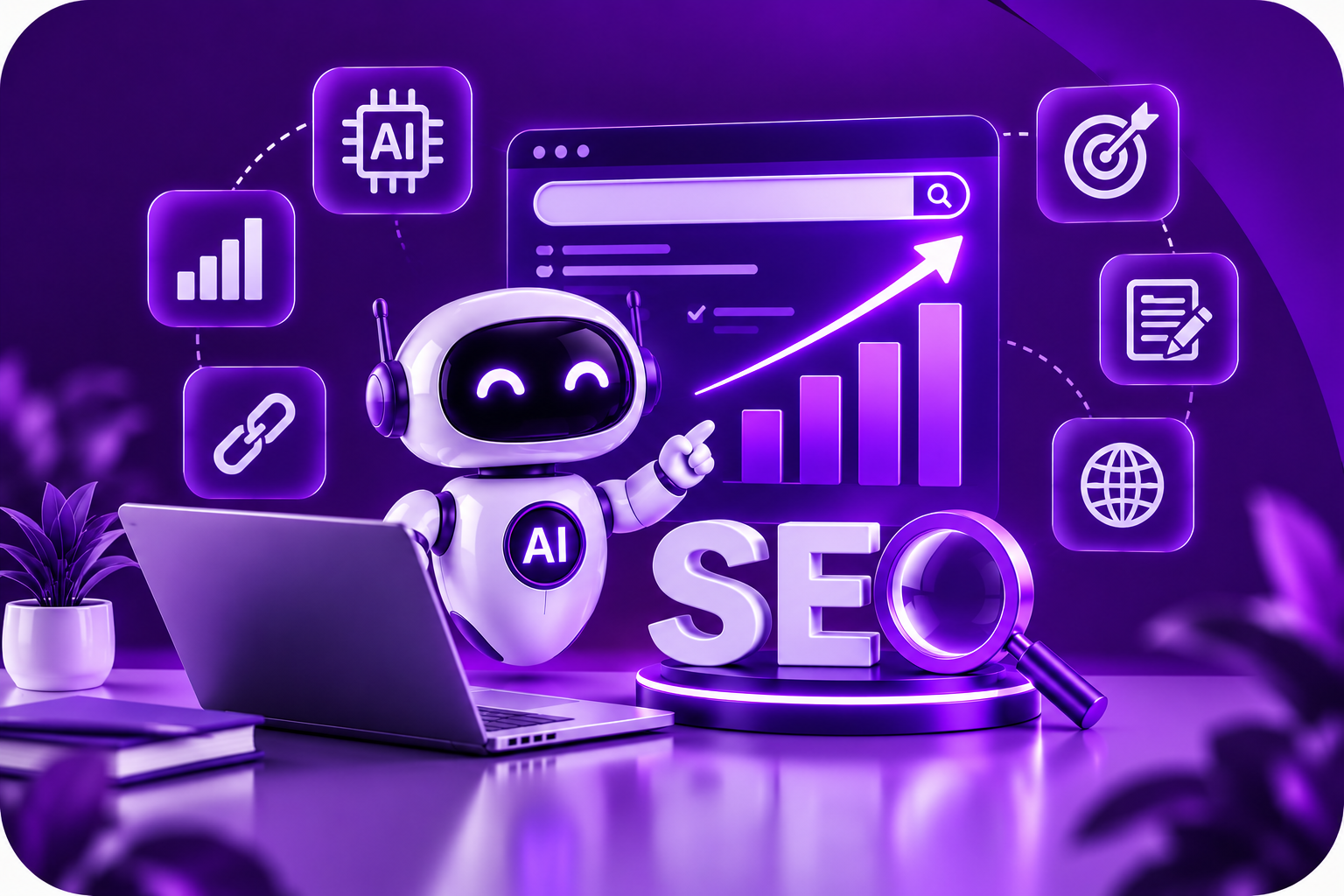
AI SEO is becoming an important approach for businesses looking to improve their online visibility, attract relevant visitors and create more effective search strategies. Artificial intelligence can help businesses analyze search trends, understand user behavior, identify content opportunities, and streamline different SEO activities.
With the growing use of artificial intelligence in digital marketing, businesses can combine traditional search engine optimization with automation and data driven insights. From keyword research and content planning to technical analysis and performance monitoring, AI can support multiple areas of an SEO strategy.
What Is AI SEO?
AI SEO refers to using artificial intelligence technologies to support and improve search engine optimization activities. Instead of relying entirely on manual research and analysis, businesses can use AI to process large amounts of information and identify useful patterns.
An effective AI riven search optimization strategy can assist with keyword research, competitor analysis, content planning, search intent analysis, technical SEO, and performance monitoring. However, AI should support strategic decision making rather than replace human expertise.
For businesses operating in competitive markets, AI driven search strategies can help organize large amounts of SEO data and identify areas that may require further attention.
How AI SEO Helps Businesses Optimize Their Websites
AI SEO can help businesses improve website optimization by analyzing search data, identifying relevant keywords, and finding areas where content can be strengthened. It can also support search intent analysis, competitor research, content planning, and technical SEO improvements.
Some common ways AI tools for SEO can support website optimization include:
- Identifying relevant keyword opportunities
- Analyzing search intent and content relevance
- Finding content gaps and optimization opportunities
- Suggesting improvements to existing website content
- Supporting internal linking strategies
- Reviewing technical SEO elements
- Monitoring website performance and search trends
- Generating content ideas based on user queries
AI-powered SEO can make optimization workflows more efficient by helping businesses process large amounts of search and website data. However, recommendations should be reviewed by SEO professionals to ensure they align with the website’s goals, audience, and overall search strategy.
Understanding AI Content Optimization
AI content optimization involves using artificial intelligence to improve the relevance, structure, clarity and search focused elements of website content. AI can analyze existing pages and provide suggestions related to topics, keywords, headings, readability and content gaps.
An effective AI content optimization process begins with understanding the audience and search intent. The content should answer genuine user questions rather than simply adding keywords repeatedly.
Businesses can use automated content analysis to identify related topics and organize information more effectively while maintaining a natural writing style. Human review remains important to ensure that the final content is accurate, useful, original and aligned with the brand.
What Is AI Website Optimization?
AI website optimization uses artificial intelligence to analyze different aspects of a website and identify opportunities for improvement. These may include page structure, technical elements, content organization, user experience and search performance.
Through intelligent website analysis, businesses can examine website data more efficiently and identify pages that may need improvements. AI can also assist with detecting content gaps, suggesting internal links and organizing information based on user behavior.
Another benefit of automated website analysis is the ability to evaluate multiple website elements at scale. However, recommendations should be evaluated carefully before making technical or structural changes.
How AI Can Support Keyword Research
Keyword research is one of the fundamental parts of SEO. AI can help analyze large keyword datasets and group related search terms according to topics and search intent.
Instead of targeting individual keywords without context, businesses can use AI to identify topic clusters and related questions. This can help create content that addresses different stages of the user’s search journey.
AI can also assist with identifying long tail search terms, related queries, and content opportunities that may otherwise require significant manual research.
Using AI for Local SEO
Local SEO is particularly important for businesses that serve customers in a specific geographic area. AI can help organize local keyword research, analyze competitor visibility, identify relevant topics, and evaluate website content for local search intent.
For a business targeting customers , content should naturally address relevant services, locations, customer needs, and search queries without unnecessarily repeating geographic keywords.
AI can support local SEO research, but businesses should also maintain accurate business information, consistent contact details, useful location pages, customer reviews, and relevant local content.
How AI Can Improve Content Planning
Content planning becomes more efficient when businesses understand what their target audience is searching for. AI can analyze existing content and suggest related subjects, questions, and topic clusters.
Marketers can use these insights to create content calendars covering informational, commercial, and transactional search intent. This approach helps websites build topical depth instead of publishing unrelated articles.
AI can also help identify older pages that may require updates based on changes in search behavior, industry information, or business offerings.
AI and Technical SEO
- Broken links
- Duplicate content
- Missing metadata
- Heading structure
- Internal linking
- Page performance
- Crawl related issues
- Content organization
AI SEO and Human Expertise
Artificial intelligence can process information quickly, but successful SEO still requires human judgment. Search intent, brand positioning, audience expectations, factual accuracy, and business objectives require careful evaluation.
AI generated content should therefore be treated as a starting point rather than automatically publishing everything produced by a tool.
A strong SEO workflow combines AI assisted research with human editing, subject expertise, original insights, accurate information and a clear understanding of the target audience.
Common Mistakes When Using AI for SEO
Using AI without a clear strategy can create problems. Some common mistakes include producing generic content, repeating keywords excessively, publishing inaccurate information, and creating large amounts of content without understanding search intent.
Another issue is relying entirely on AI generated recommendations without validating them. SEO decisions should be based on relevant data, website context, user needs, and business goals.
Businesses should focus on creating genuinely useful resources rather than attempting to manipulate search rankings through excessive automation.
How Businesses Can Build an AI SEO Strategy
A practical AI SEO strategy can begin with an assessment of the current website and its search performance.
The process can include:
- Review existing organic search performance.
- Identify important business topics and services.
- Research relevant keywords and search intent.
- Analyze competitors and content gaps.
- Create topic clusters and content plans.
- Improve existing website content.
- Review technical SEO opportunities.
- Monitor rankings, traffic, and engagement.
- Update content based on performance and changing search behavior.
Using AI tools for SEO throughout this process can reduce repetitive research and help teams organize information more efficiently.
Measuring AI SEO Performance
- Organic traffic
- Search impressions
- Click through rate
- Keyword visibility
- Organic conversions
- Engagement
- Indexed pages
- Leads generated through organic search
Frequently Asked Questions
What is AI SEO?
AI SEO combines artificial intelligence with traditional search engine optimization to support activities such as keyword research, content planning, competitor analysis, technical SEO and performance monitoring.
Can AI replace an SEO professional?
AI can automate and assist with many SEO tasks, but it does not completely replace strategic planning, human judgment, technical expertise or industry knowledge.
What are AI tools for SEO used for?
AI tools for SEO can assist with keyword research, content analysis, search intent research, competitor analysis, content planning, technical audits and performance monitoring.
How does AI powered SEO improve content?
AI powered SEO can help identify relevant topics, search queries, content gaps, and optimization opportunities. Human review is still important for accuracy, originality and usefulness.
What is AI content optimization?
AI content optimization uses artificial intelligence to analyze and improve content structure, relevance, topic coverage, readability and alignment with search intent.
Is AI website optimization useful for local businesses?
Yes. AI website optimization can help local businesses analyze website content, identify technical opportunities, improve information architecture and discover areas that may support better search visibility.
Can AI help with local SEO?
AI can support local SEO research, content planning, competitor analysis, keyword discovery, and website optimization. Businesses should still maintain accurate local business information and provide useful content for their target audience.
What is the role of AI website optimization in SEO?
AI website optimization can help analyze website structure, content, technical elements and performance data to identify potential opportunities for improvement.