To attract potential customers in today’s competitive market, your website must be packed with helpful information, be fast, provide a great browsing experience and be easy for search engines to understand. Businesses who invest in improving their websites will benefit from increased opportunities to attract the right audiences organically.
Optimising your website will help the search engines understand your site content and help them determine which pages match relevant search queries. If your website is optimised well then you’ll have headings, content and internal links that will make your website a great experience. By investing in Onpage seo services Hyderabad, you can boost your online presence, improve your organic visibility and attract potential clients actively searching for your products and services.
What Is Website Optimisation?
Website optimisation is the process of improving various factors on your webpage to create a more useful resource whilst helping search engines understand your website.
When someone lands on your website, they should understand exactly what you offer and find the information they need easily. Using a well structured website will make it easier for users to navigate between sections.
A well optimised website can also support better SEO ranking by improving content relevance and website usability.
Benefits include:
Improved Organic Visibility – Having relevant content will make it easier for search engines to understand your webpages.
Improved User Experience – Clear layouts will help users find the information they are looking for.
Improved Engagement – Useful content will encourage users to look around your website.
Increased Relevant Traffic – Optimised webpages can attract people searching for specific services.
Improved Conversions – Useful information will allow users to make confident decisions.
Overall the improvements will help your website be useful for both users and search engines.
Key Aspects Of Website Optimisation
There are a variety of aspects to consider when improving your website.
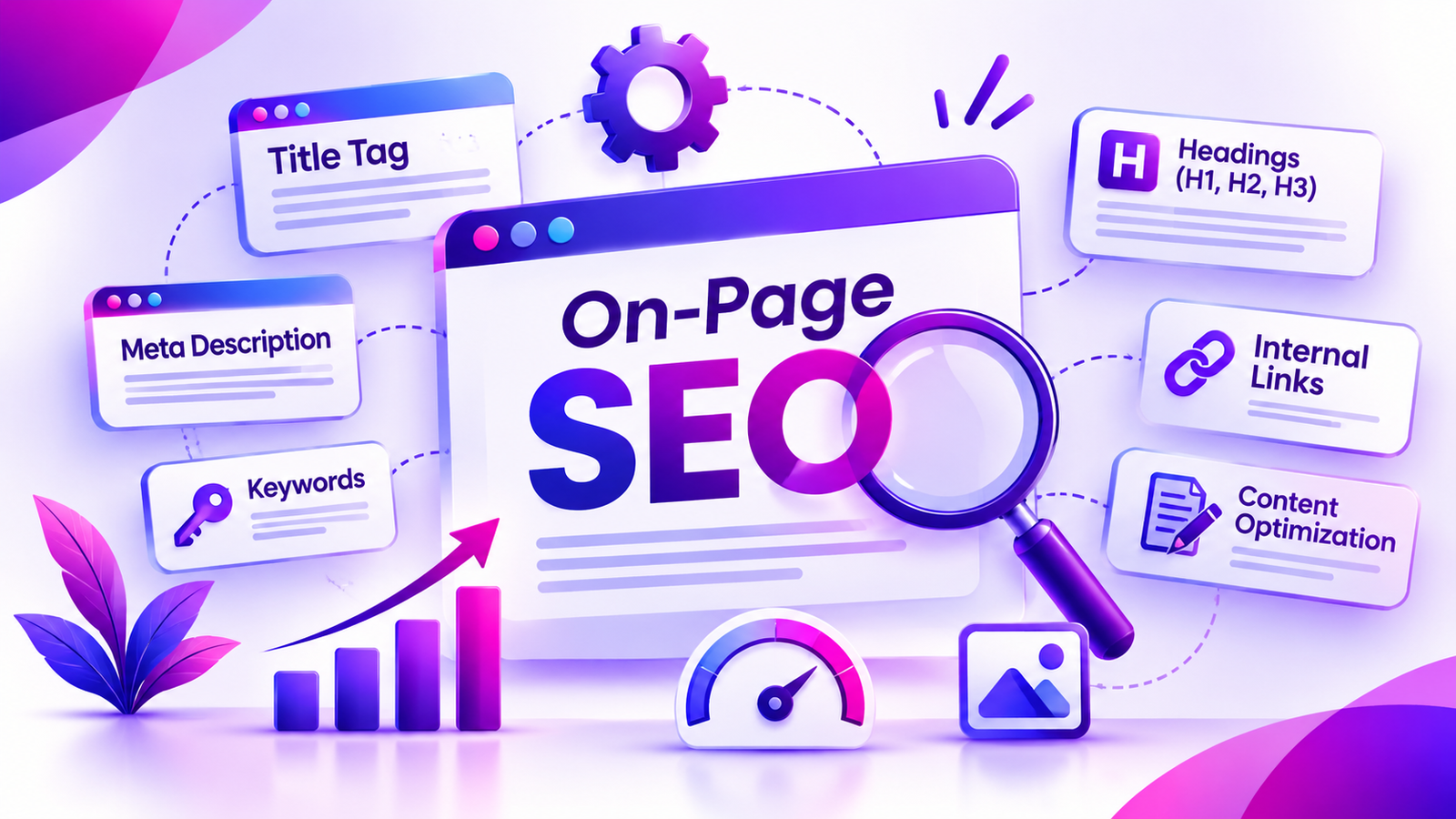
Title Tags
Title tags tell search engines what your page is about. They are often seen as headlines in search results.
A good title tag should:
- Clearly tell users what your page is about.
- Include your relevant targeted keywords.
- Be unique to all of your important webpages.
- Encourage users to click through.
- Accurately reflect your page content.
Don’t try to stuff your title tags with keywords. A meaningful title that reflects what users searched for will be more beneficial.Well written title tags can improve search visibility and support your SEO ranking.
Meta Tags
Meta tags provide information to search engines about your webpage. These are included in your HTML.
Important tags to include are:
- Title Tag
- Description Tag
- Robots Directive
- Viewport Tag
Each tag will have a specific purpose. Robots directives will include instructions and description tags will give a summary of your webpage.
You should regularly check your meta tags to ensure you have relevant information on your important pages. If there aren’t any, duplicates or they haven’t been set up correctly then you could run into avoidable issues.
Meta Description Optimisation
A meta description is a short summary that may appear under your title tag in search engines. This will give users an insight into what they can expect from the webpage.
A good meta description should:
- Give a summary of your page.
- Include your main topic.
- Include useful information.
- Encourage relevant users to click through.
- Be unique to your important pages.
Avoid using the same meta description on multiple pages. Ensure each important page has a relevant description. You can also regularly check to ensure it still remains relevant if your website content changes.
Keyword Optimisation
Keyword research will help you understand what words and phrases users will search for.
By optimising your keywords you can include relevant search terms naturally throughout your website.
Effective keyword optimization starts with understanding your audience and selecting search terms relevant to your services.
Ensure you:
- Understand the main search intention for each page.
- Use relevant primary and secondary keywords.
- Include important phrases in relevant headings.
- Use relevant terminology throughout.
- Avoid repeating the same phrases.
A good keyword optimization strategy will not include stuffing your paragraphs with keywords. Instead your content should be useful to help answer your audience’s questions.
A balanced approach will also avoid too many pages fighting for the same search intention. You should regularly check your keyword strategy if you are creating new landing pages or updating existing ones.
Content Structure
A well structured content will help your webpages be easy to read. Users will be able to find the information they need without having to read through all of your content.Combining useful content with proper keyword optimization helps create webpages that match user search intent.
Headings
Headings will help organise your information.
- H1 – Main topic
- H2 – Main sections of content
- H3 – Explain your secondary points from your H2
- H4 – Further information where needed.
Ensure you’re using the headings in a logical order.
Useful And Relevant Content
Ensure your website content answers questions users are likely to ask. Don’t add extra paragraphs to increase the word count.
Service Pages – Describe what the service includes, who would need it, what benefits it provides and how customers can get started.
Information Blogs – Ensure you have enough information relating to your topic. Add practical examples where possible.
Internal Links
Internal linking will help link your webpages together.
For example, a digital marketing agency could link their SEO service page to related blogs about keyword research, technical improvements and content marketing.
This will help users find related information and help search engines find connections.
Keyword optimization should also consider relevant anchor text when connecting related webpages.
Ensure your anchor text describes where you are linking to. Don’t include any links that don’t benefit the reader.
Image Optimisation
Adding images to your website can make your content more engaging. However, if your images are large or not optimised this can impact performance.
Ensure you:
Use the correct format -Try to use modern formats like WebP or AVIF.
Compress your images-Keep them small whilst maintaining quality.
Add descriptive alt text– This will help describe the meaningful parts of the image.
Use relevant filenames– Use descriptive filenames.
Lazy load– Load images below the fold where appropriate.
Ensure you’re optimising your images to help improve accessibility and performance.
Page Speed & Mobile Experience
Most users will expect your website to load quickly and work well on different devices. If your website is slow or isn’t easy to use then users won’t want to look around.
Google use Core Web Vitals to analyse important page experience factors.
These include:
- Largest Contentful Paint (LCP) – Loading
- Interaction to Next Paint (INP) – Responsiveness
- Cumulative Layout Shift (CLS) – Stability
You can use Google PageSpeed Insights to analyse how your website is performing.
Website speed and mobile usability are important considerations for maintaining a strong SEO ranking.
Mobile Responsiveness
Your website should be mobile friendly. Ensure it displays well on smartphones, tablets and desktops. Menus, buttons, forms and images should all be easy to use.
Common Mistakes When Optimising
Even if your website has useful content you could be struggling with organic performance if you miss any of the key optimisation factors.
Avoid:
- Duplicate Content – Having the same content on multiple pages without a clear reason can cause confusion.
- No Headings – Without a logical structure your pages will be hard to navigate.
- Broken Internal Links – Incorrect links will create a poor browsing experience.
- Keywords Stuffing – Too much repetition of search terms will make your content feel unnatural.
- No Image Descriptions – Important images don’t have useful alternative text.
- Slow Page Speed – Large images and unnecessary scripting can impact performance.
- Poor Mobile Experience – Difficult navigation can frustrate smartphone users.
- Duplicate Page Titles – Having similar page titles will make it difficult to tell your pages apart.
Carrying out regular audits can help identify these issues.
Tools To Help Optimize Your Website
Using reliable tools will help you understand how your website is performing.
Google Search Console
This tool will help you understand how your website is performing in searches. You can see what issues you may have with your indexing and what search terms are bringing users to your website.
Google Analytics 4
This tool will help you understand how users are interacting with your website. You can analyse traffic, engagement and conversions.
Google PageSpeed Insights
This tool will analyse your page performance and give suggestions to improve your loading time and Core Web Vitals.
Screaming Frog SEO Spider
This tool will help identify technical issues such as broken links, no page titles, duplicate descriptions and incorrect headings.
Using these tools will help you analyse your website effectively. Regularly monitoring website performance helps identify opportunities to improve your SEO ranking.
How To Analyse Your SEO Performance
It’s important to regularly analyse improvements made to your website.
Track:
- Organic Clicks & Impressions
- Average Positions
- Organic Traffic
- Engagement & Conversions
- Page Loading Times
- Indexing & Crawling
- Important Landing Page Performance
Tracking your SEO ranking will help you understand how your webpages are performing for relevant search terms. However, you shouldn’t just focus on your rankings.
You may have more relevant traffic even if your average position has changed slightly. Just because your website is more visible doesn’t mean you will get more enquiries or sales.
Regular content reviews and keyword optimization can help maintain the relevance of your important landing pages.
Instead focus on your visibility, relevant traffic, engagement and business outcomes.
Why Choose Aivolv for On Page SEO?
Choosing your digital marketing partner can make a difference to how well your website performs in searches. We focus on practical digital marketing strategies to help you improve your online presence.
Our Onpage seo services Hyderabad will help you identify areas to improve your website and create a strategy based on your digital marketing goals.
We focus on:
Analysis – Analyse your current webpages to identify areas to improve.
Content Improvements – Ensure your website content is clear, useful and relevant.
Technical Suggestions – Identify any issues impacting your website’s accessibility and performance.
Search Visibility – Improve your important website elements to help boost organic growth.
Monitoring – Track your results and identify areas to improve.
Whether you’re creating a new website or improving your current one, having a strategy in place will help you create a strong foundation for future organic visibility.