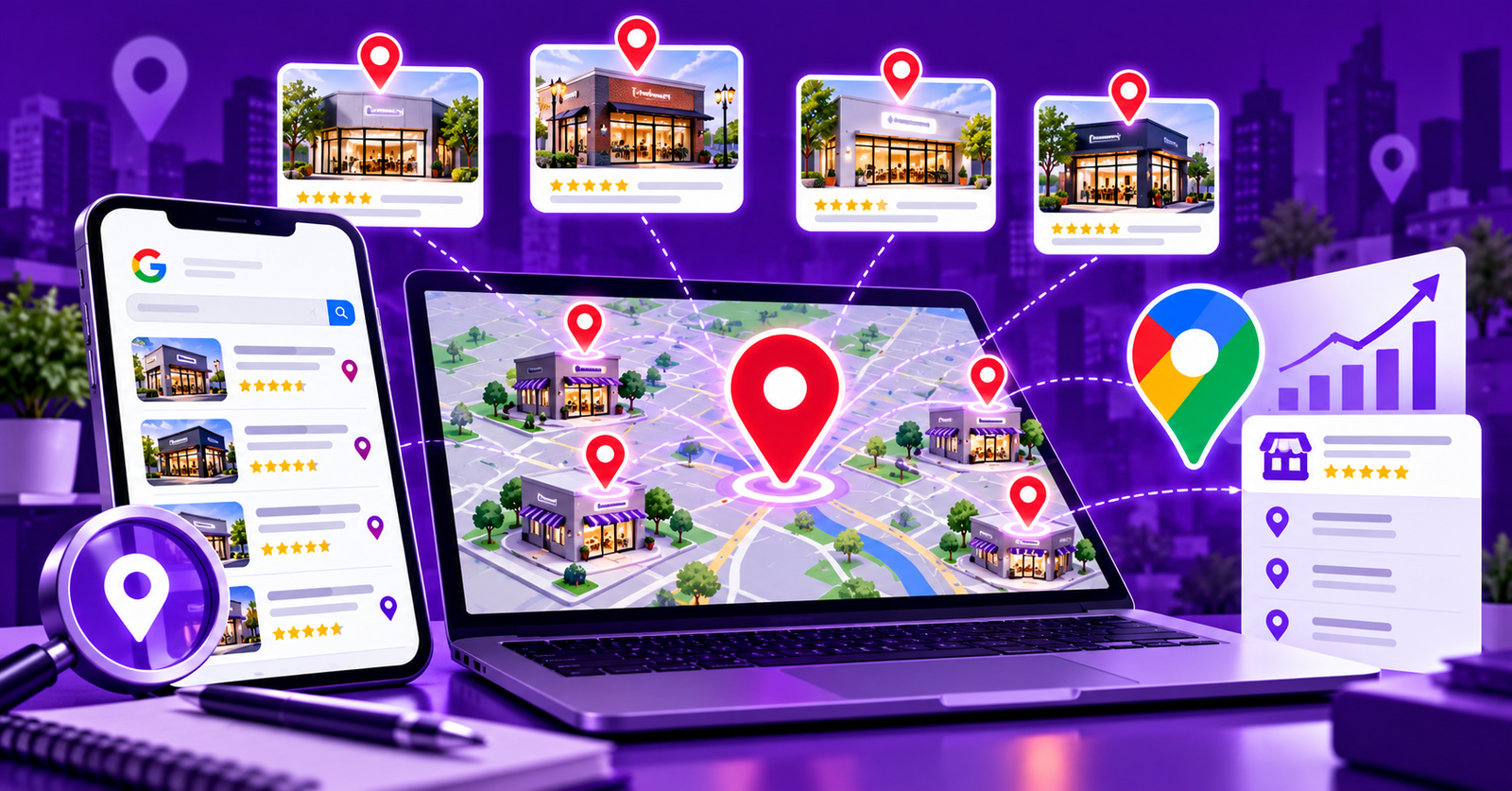
Businesses with several branches need more than a general online presence to attract customers in different areas. Each location should provide accurate information, relevant services and useful details that help nearby customers decide where to go. Local Search Visibility improves when a business builds a clear connection between its website, individual locations and the information customers find online.
Why Is Local Search Important for Multi Location Businesses?
- Reach customers searching for nearby services
- Make branch locations easier to identify
- Provide accurate contact information and operating hours
- Build trust through genuine customer reviews
- Direct visitors to relevant location pages
- Understand which branches attract enquiries
Create a Dedicated Website Page for Each Location
- Branch address and contact number
- Opening hours and directions
- Services available at that location
- Photographs of the actual premises
- Relevant customer reviews or testimonials
- Parking information or nearby landmarks, where useful
- Answers to common questions about the branch
Keep Google Business Profiles Accurate
- The official business name
- The appropriate business category
- The correct address or eligible service area
- A working local telephone number
- The relevant website or location page link
- Regular and special operating hours
- Accurate service information and photographs
Use Location Focused SEO Strategies
- Use descriptive page titles that identify the service and location naturally.
- Write original content for each branch.
- Link relevant service pages to the appropriate location pages.
- Include clear contact details and directions.
- Make sure location pages work properly on mobile devices.
- Remove outdated branch information when a location closes or moves.
Target Relevant Local Search Terms
- Research terms associated with the actual services offered.
- Identify neighborhood names that customers commonly use.
- Include relevant phrases naturally in headings and page descriptions.
- Answer questions specific to each branch.
- Avoid inserting location names where they do not make sense.
Build a Consistent Business Listing Presence
Customers may discover a business through directories, map applications, industry websites and other online platforms. Inaccurate information across these sources can create confusion about where a branch operates or how to contact it.
Check that the business name, address and phone number match the information used by the actual location. Review important directory listings periodically and correct outdated details where possible.
For multi location companies, maintain a central record of each branch’s official details. This makes it easier to manage updates when a phone number changes, a location moves or opening hours are revised.
Consistency does not mean creating listings everywhere. Prioritize reputable platforms that are relevant to your industry and customers.
Strengthen Visibility on Google Maps
- Verify eligible business profiles.
- Select categories that accurately describe each branch.
- Keep contact information and opening hours current.
- Add genuine photographs of the premises.
- Respond professionally to customer reviews.
- Link each profile to the most relevant website page.
Manage Reviews for Every Branch
- Thanking customers for genuine feedback
- Responding to complaints in a professional manner
- Identifying repeated service problems
- Protecting private customer information
- Avoiding fabricated reviews or misleading incentives
Create Useful Local Content
Location pages are more valuable when they answer questions specific to the people and communities they serve. Instead of publishing nearly identical articles for every branch, develop content that reflects genuine differences in services, facilities or customer needs.
For example, a branch page might explain its available appointments, directions from nearby landmarks or services that are offered at that particular location.
A coordinated content strategy supported by local seo services can help businesses identify useful topics for their audiences while keeping information accurate across branches.
Avoid publishing pages about locations the business does not actually serve or operate in. Local content should reflect a genuine business presence and provide practical value to visitors.
Track Results for Each Business Location
- Website visits to individual location pages
- Calls and direction requests from business profiles
- Customer enquiries and appointment requests
- Search impressions and clicks
- Review volume and customer feedback
- Conversions associated with each branch
Common Mistakes to Avoid
- Reusing identical content on every branch page
- Displaying outdated addresses or telephone numbers
- Creating duplicate profiles for the same location
- Adding keywords to business names unnecessarily
- Listing services that a branch does not provide
- Ignoring reviews and customer questions
- Creating location pages with little useful information
- Assuming that ranking improvements are guaranteed
Frequently Asked Questions
Does every business branch need its own Google Business Profile?
Each eligible, distinct real world location can have its own profile. Businesses must follow Google’s eligibility requirements and should not create multiple profiles for the same location.
How can a business improve local rankings across several locations?
Maintain accurate business information, create useful pages for individual branches, select appropriate categories, respond to reviews and build a consistent online presence. Results will vary because local rankings also depend on distance, relevance and prominence.
Why should each branch have a separate website page?
A dedicated page helps customers find the correct address, contact details, services and directions. It also gives search engines more specific information about that location.
How often should business listings be reviewed?
Check listings regularly and update them whenever business details change. A monthly review can help identify outdated information, while urgent changes should be addressed promptly.
Can local search optimization guarantee more customers?
No. Optimization can improve the quality and relevance of business information, but actual enquiries depend on many factors, including customer demand, competition, location, service quality and website experience.