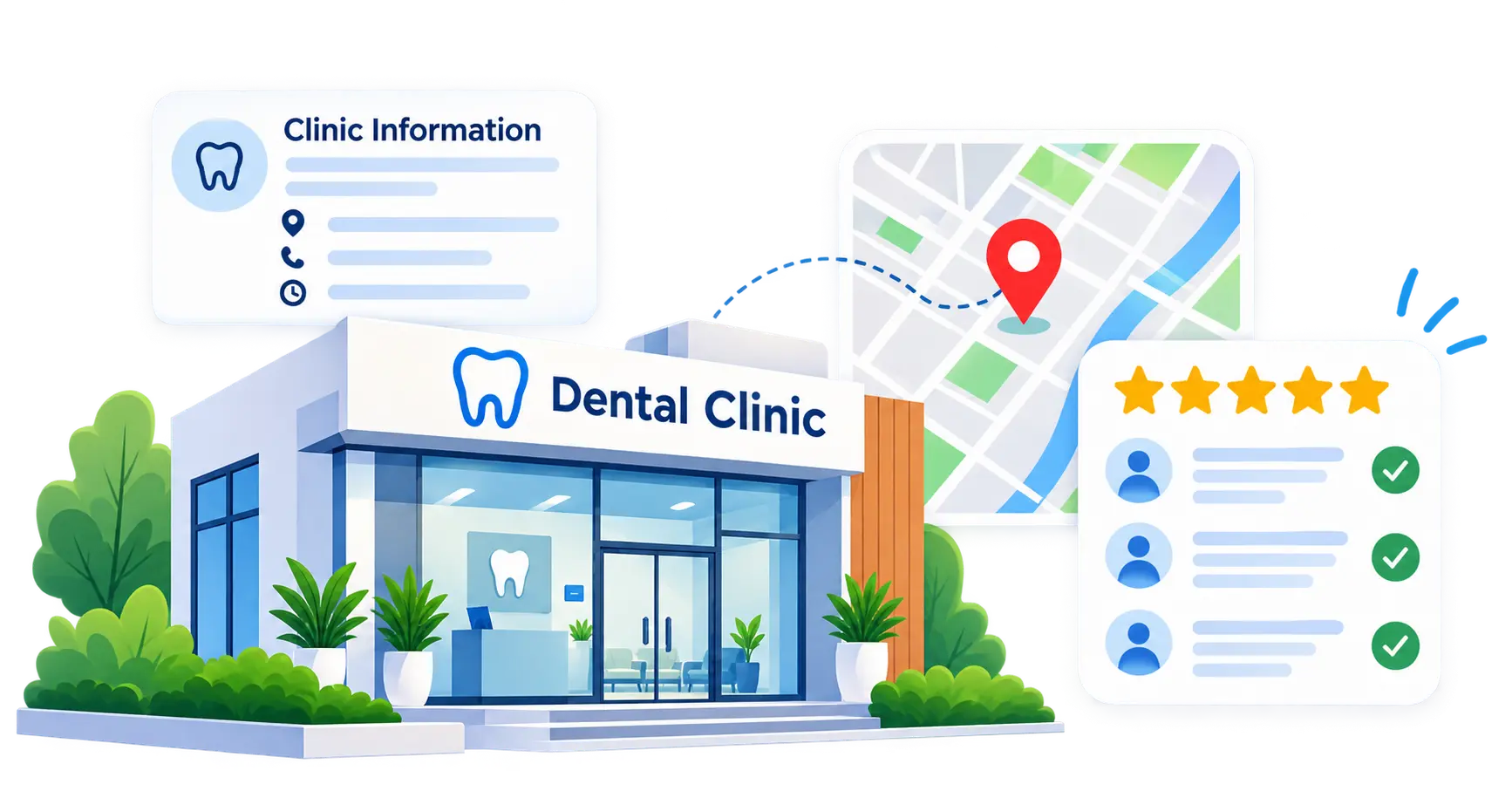
Why Digital Marketing Compliance Matters for Dental Clinics
This guide to dental clinic digital marketing guidelines in India 2026 sets out practical checks for website content, social posts, search campaigns and patient information.
Dental clinic digital marketing guidelines in India in 2026 require a careful balance between being discoverable and communicating responsibly. Patients use websites, Maps and social media to compare locations, understand treatments and check credentials. A clear page can help them make an informed choice; an exaggerated promise can distort that choice.
For BDS practitioners, MDS specialists, clinic owners and dental chains, visibility should start with accurate information. The National Dental Commission has replaced DCI, while the continuing dental ethics framework sets specific limits on advertising. This guide explains those limits and practical ways to approach SEO, social media and paid campaigns. [S1] [S2] [S3]
Who Regulates Dental Clinic Advertising in India?
When applying Dental Council of India advertising rules, clinics should distinguish the legacy 2014 ethics code from the current National Dental Commission framework and later directions.
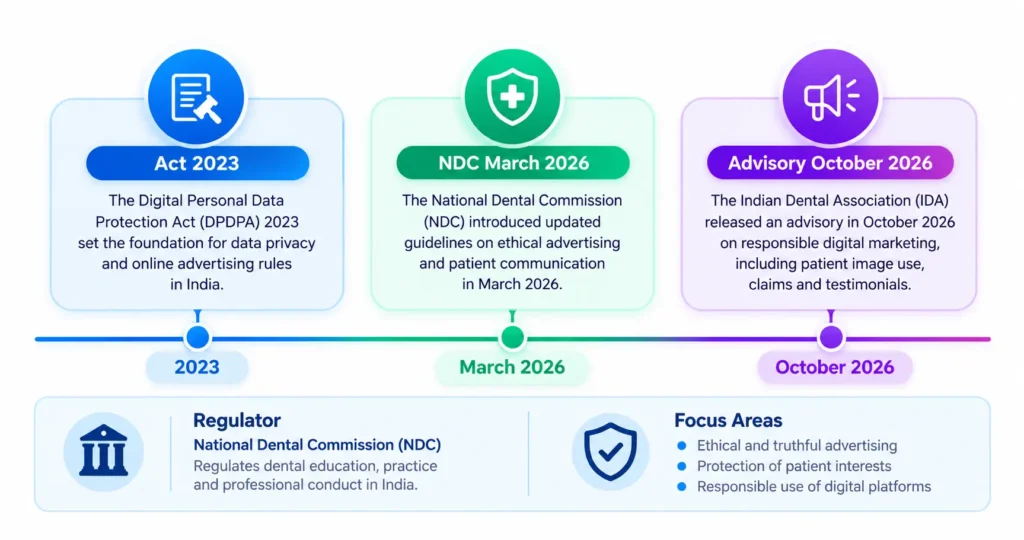
Dentistry has its own professional regulatory framework. The government confirms that the NDC framework took effect on 19 March 2026, replacing DCI. Sections 58–59 of the NDC Act, 2023 govern repeal, savings and transition. Section 59(2) continues earlier rules and regulations pending replacement; the NDC’s 14 October advisory specifically refers to the 2014 dental ethics code. [S1] [S2] [S6]
The NDC, its Ethics and Dental Registration Board and State Dental Councils have relevant roles. State-council continuity is addressed in section 59(3); disciplinary provisions appear in section 29. Check the council responsible for the practitioner and clinic location. [S1]
NMC primarily regulates medical practitioners under its framework. Its medical advertising guidance should not be copied wholesale into a dental policy. Mixed hospitals may face overlapping institutional requirements and need a separate scope review. Consumer law and CCPA misleading-advertisement guidelines also matter; ASCI standards are self-regulation, while Google and Meta rules govern platform access. Passing one check does not pass the others. [S7] [S8] [S9] [S10]
Dental Advertising Rules in India - What Is Actually Allowed?
The phrase dental advertising rules in India covers more than ad copy: professional ethics, consumer protection, privacy and platform policies may all be relevant.
Factual websites, qualifications and fees
For practical purposes, DCI advertising guidelines for dentists remain a useful historical search term for the 2014 code, but current guidance should also reflect the NDC transition.
Factual dental websites and internet listings are expressly contemplated by the ethics code. Regulations 8.2.8–8.2.9 permit public-information listings and factual websites, including facilities and fees, without misleading claims or superiority. Suitable content includes the real address, contact details, opening hours, available services and accurate dentist biographies. [S3]
Use recognised qualifications and verify specialist descriptions. Regulation 8.3.3 distinguishes claiming specialist status from practising a branch with adequate qualifications, competence and training. A short course does not automatically establish a recognised specialist title. Registration details should be accurate; regulation 3.4.1 expressly requires the number in the clinic and specified professional documents. Displaying it in the website profile is a sensible transparency measure. [S3]
Explain treatment options, limitations and cost factors. Regulation 5.7 requires clear treatment-cost information and estimates. Avoid a headline price that conceals the components a typical patient must pay. [S3] [S9]
Use the establishment’s proper description. Regulation 8.10 addresses when a practice may be called a dental hospital, including inpatient postoperative care and applicable state requirements. A hospital label is not simply an SEO keyword. [S3]
Promotions, patient procurement and claims
Clinics reviewing dental clinic marketing regulations in India should assess the full campaign, including the landing page, offer terms, agency contract and how enquiries are handled. Apply dental clinic marketing regulations in India to the offer terms as well as the headline.
Regulation 8.1 allows advertising within professional limits; regulation 8.2 restricts solicitation and self-aggrandisement. “Best dentist”, “first ever”, guaranteed results and boastful cure stories create serious concerns. False benefits and misleading inducements are addressed in 8.1.1–8.1.3. Transparent fee information is different from an inducement-led discount campaign; packages require review of their substance and presentation. [S3]
Commercial patient canvassers are addressed in 8.1.4, and referral commissions or fee splitting in 8.6. Review lead-generation contracts carefully. Calling a procurement payment a marketing fee does not resolve the issue; a fixed retainer is not an automatic safe harbour either. [S3]
Dental Marketing Activities - Allowed, Restricted or Conditional?
“Lower risk” below is a practical assessment, not legal clearance. Code references are to the 2014 regulations. The October advisory adds a current warning for patient-centred promotional material. [S3] [S6]
| Marketing activity | Regulatory assessment | Conditions or concerns | Recommended approach |
|---|---|---|---|
|
Factual clinic website |
Expressly contemplated |
8.2.9; accuracy throughout |
Publish verifiable services and fees |
|
Internet directory listing |
Expressly contemplated |
8.2.8; no superiority |
Keep location and hours correct |
|
Dentist biography |
Conditional |
Recognised titles; no boasting |
Verify registration and qualifications |
|
New-service announcement |
Expressly contemplated |
8.2.7; no “best/first” boasting |
Describe availability factually |
|
Educational article |
Conditional |
8.1.7–8; evidence, no disguised promotion |
Explain options without solicitation |
|
Paid Search ad |
Campaign review required |
Solicitation, claims and Google policy |
Review copy, targeting and destination |
|
Paid Instagram ad |
Campaign review required |
Same ethics plus Meta rules |
Check current creative eligibility |
|
Independent patient review |
Distinct from clinic endorsement |
Confidentiality and platform rules |
Reply without confirming treatment |
|
Reposted testimonial |
High risk |
Self-promotion; October advisory |
Prefer factual service information |
|
Before-and-after promotion |
High risk |
Advisory, misleading impressions, privacy |
Use neutral explanatory illustrations |
|
Procedure livestream |
High risk |
Advisory and confidentiality |
Use reviewed educational animation |
|
Fee schedule |
Expressly contemplated online |
8.2.9; no misleading omissions |
Explain inclusions and variables |
|
Discount/package campaign |
Conditional; significant risk |
Inducements, pressure, exclusions |
Review offer; prioritise cost clarity |
|
Referral reward |
Restricted |
8.6; patient procurement |
Avoid referral commissions or gifts |
|
Guaranteed outcome |
Misleading-claim risk |
8.1–8.2; consumer law |
Explain uncertainty and assessment |
|
Influencer endorsement |
High risk |
Solicitation, disclosure, credentials |
Obtain professional review first |
|
Reminder message |
Conditional; generally lower risk |
Opt-in and confidentiality |
Send minimal appointment details |
Social Media Marketing Guidelines for Dentists
Apply dental advertising rules in India to the complete post, not only the caption; images, calls to action, paid boosts and linked pages also affect its purpose.
Instagram and Facebook
The DCI advertising guidelines for dentists should be considered alongside current platform rules before a clinic publishes promotional content or engages an influencer.
Use Instagram for clear oral-health explanations and factual introductions. Keep Facebook business details current and community education evidence-based. Neither an organic post nor a paid boost escapes professional obligations. Applying dental advertising rules in India consistently means reviewing the creative, caption, audience and destination together. Patient stories, transformations, offers and self-congratulatory case reports warrant particular scrutiny. [S3] [S6]
Regulation 8.1.8 restricts surrogate advertising disguised as public education and contact details used there to attract patients. Do not assume that adding a clinic telephone number and “book now” to every educational reel is harmless because factual contact information is allowed on a website. [S3]
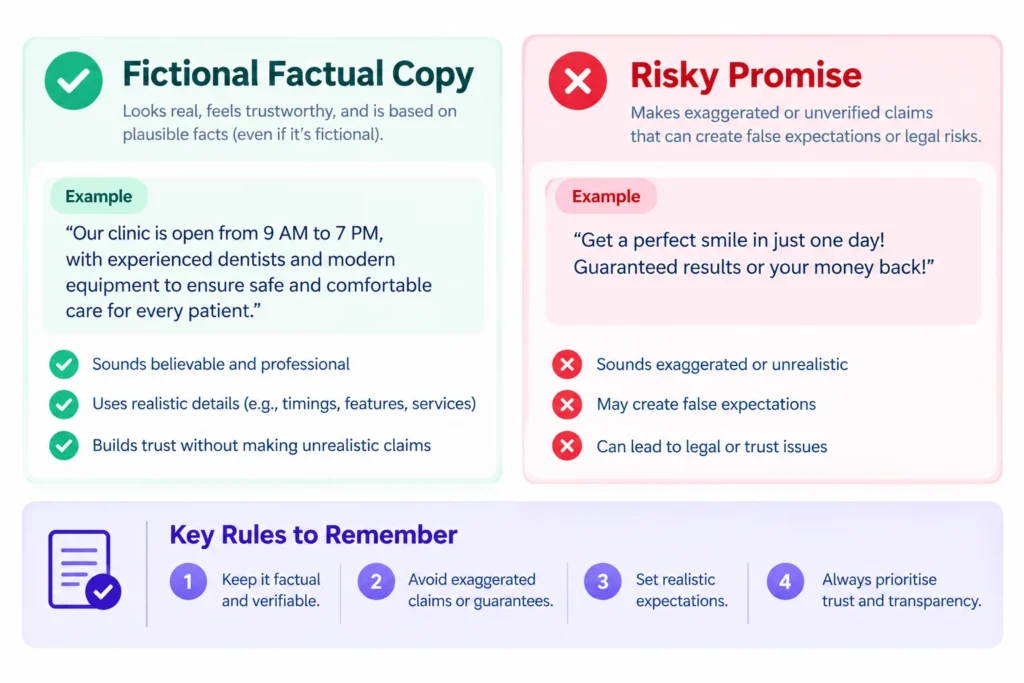
Illustrative lower-risk wording: “Clear aligners require an assessment of suitability and ongoing monitoring.” Risky wording: “Embarrassed by your crooked teeth? Our celebrity dentist guarantees a perfect smile this month.” The latter combines personal-attribute targeting concerns, pressure and an outcome promise. Meta’s indexed official guidance flags personal attributes; its full current policies must be checked before launch because retrieval was restricted during this review. [S17] [S18]
YouTube
Explain consultation steps, treatment alternatives and questions patients can ask. Use reviewed diagrams instead of patient procedure broadcasts. Titles such as “Questions to ask before an implant consultation” communicate a topic without implying universal suitability or showcasing a cure. Avoid equipment endorsements and unsupported superiority claims. [S3] [S6]
Separate appointment communication from optional marketing permission. WhatsApp requires the recipient’s number or username and opt-in, respect for opt-outs, and appropriate privacy permissions. Its Business Platform has template and customer-service-window rules. A person booking once has not necessarily agreed to promotional broadcasts. [S20]
Use minimal reminders, verify the recipient and restrict staff access. Avoid group messages exposing patient identities, forwarded treatment photographs or unsolicited diagnosis requests. Encryption alone does not settle confidentiality, storage or vendor-access questions. [S3, regulation 4.2] [S20]
Google Ads Guidelines for Dental Clinics in India
A review of Dental Council of India advertising rules is separate from checking Google Ads eligibility, audience restrictions and landing-page accuracy.
Search keywords, claims and landing pages
The dental clinic marketing regulations in India context should inform keyword selection: search volume does not justify unsupported claims or prohibited solicitation.
A dental clinic must assess professional permission separately from Google eligibility. A campaign record should note how Dental Council of India advertising rules were assessed before platform approval was considered. Google’s healthcare policy expects compliance with local law and applies additional restrictions to particular services or products. It does not establish one blanket certification requirement for every ordinary dental clinic. [S14]
Review Search campaigns around implants, aligners and emergency appointments individually. Use factual descriptions of available consultations; avoid “100% implant success”, universal aligner suitability or “24/7 emergency dentist” unless that availability is true. Keywords should lead to the matching service and location, not a generic page suggesting services unavailable there. [S3] [S9]
Landing pages should identify the clinic and treating professionals, explain material limitations, show actual contact arrangements and disclose price inclusions. A “from” price requires particular care: state what it covers and what may change after assessment. Fine print does not cure a misleading headline. [S9]
Lead forms, audiences and tracking
For Dental Council of India advertising rules, clinics should document which professional code, current advisory and platform policy informed each campaign decision.
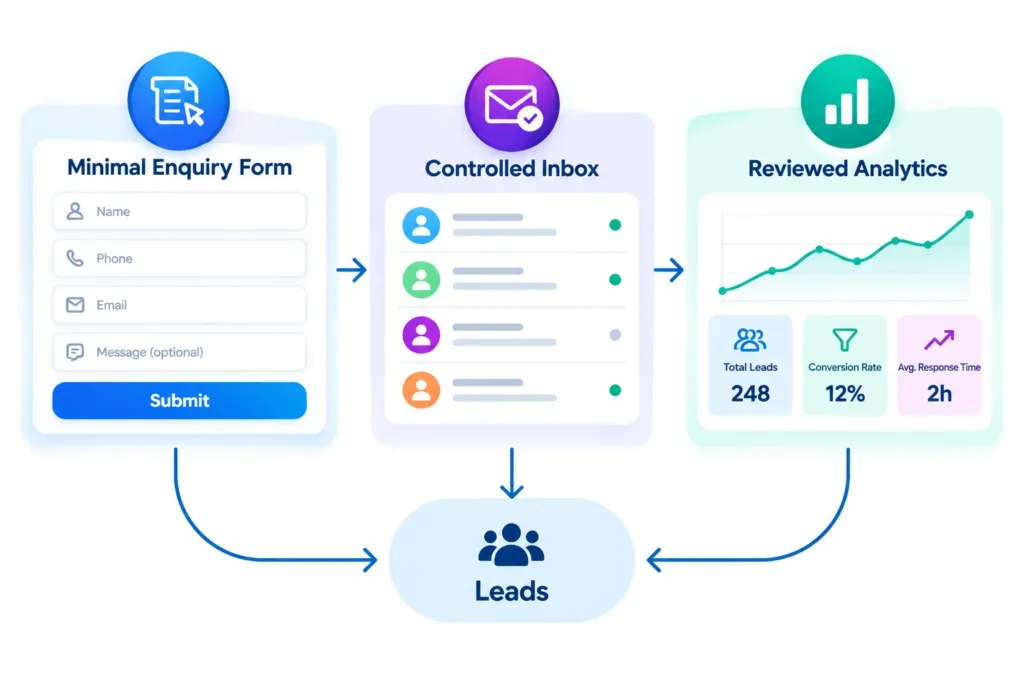
Collect only what is needed to arrange contact. Avoid demanding scans, diagnoses or detailed medical histories in advertising forms. Give a clear purpose notice and a separate choice for optional marketing. Route clinical information through an appropriately secured process. [S11]
India’s privacy transition also needs care. The November 2025 DPDP commencement instruments phase different provisions; the principal processing duties are scheduled eighteen months after Gazette publication and are not all in force on 23 October 2026. Existing confidentiality and applicable IT/SPDI obligations still require attention. Prepare notices, access controls and retention practices now, while verifying the clinic entity’s current duties and subsequent notifications. [S3, regulation 4.2] [S11] [S12] [S13]
Google restricts advertiser-curated audiences for sensitive-interest categories, including relevant health categories. Do not upload patient or treatment-based lists or enable remarketing without checking the exact policy classification. Audit tags, URLs and event payloads for health details. Prefer reviewed, minimal measurement such as an appointment-request event; server-side tracking does not itself make disclosure permissible. [S15] [S19]
SEO Strategies for Dental Clinics in 2026
Use dental clinic digital marketing guidelines India 2026 as a planning framework, while checking each recommendation against the actual professional and platform requirements.
Local SEO
Local listings should follow dental advertising rules in India by staying factual, avoiding superiority claims and representing only genuine clinic locations.
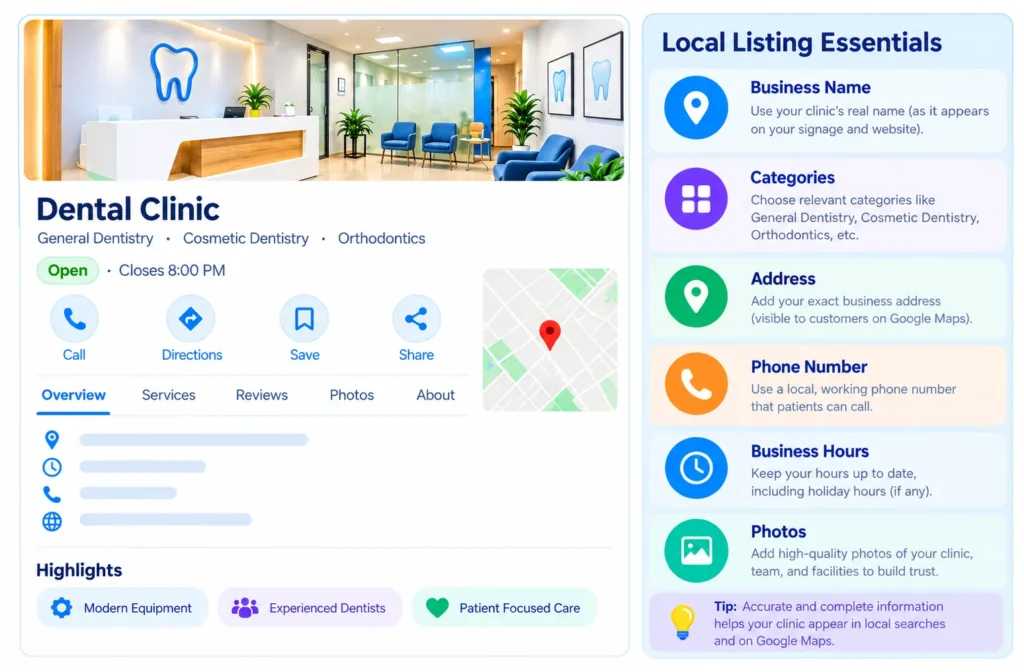
Maintain a truthful Google Business Profile, address, telephone number, hours and relevant categories. Keep reputable directory citations consistent. Create location pages for real clinics with useful access and service details. Avoid doorway pages for places without a genuine presence, stuffed business names and fabricated reviews. [S3, regulation 8.2.8] [S16]
Local SEO for dentists should help people find the correct practice. Maps visibility is an opportunity, not a promised position. Do not reveal that a reviewer is a patient when responding publicly.
Website SEO
Accurate biographies and service pages support compliance with DCI advertising guidelines for dentists and help patients understand what a clinic actually offers.
Build a mobile-friendly site with quick pages, readable service information, dentist biographies, useful FAQs and straightforward appointment navigation. Keep DCI advertising guidelines for dentists in the editorial checklist, alongside current directions. Link related information so readers can move from an educational explanation to a factual service page. Use accurate structured data matching visible content; mark up the agency article as an article, not as a dental clinic. [S23]
Show the real author, relevant reviewer and review date once confirmed. Cite authoritative sources close to claims. These measures support trust without guaranteeing rankings, featured snippets or AI mentions.
Content SEO and Six Treatment Examples
When applying Dental Council of India advertising rules, keep treatment articles informative and avoid presenting keywords as proof of outcomes, expertise or guaranteed suitability.
The following are illustrative clinic-content ideas, not measured keyword opportunities or personalised treatment advice:
Dental implants:
“Dental Implants cost factors [City]”; explain what an assessment and quotation cover, alternatives and variable eligibility. Avoid guaranteed longevity.
Root canal treatment:
“Root Canal treatment steps [city]”; explain appointment questions and follow-up. Avoid “painless for everyone”.
Orthodontics:
“Braces consultation questions”; clarify who provides care and verify any orthodontist title.
Clear aligners:
“Clear Aligner suitability questions”; distinguish the treatment category from Invisalign branding. Verify any claimed provider status.
Cosmetic dentistry:
“Teeth Whitening options and limitations”; keep smile makeover marketing free from guaranteed shade or transformation promises.
Paediatric dentistry:
“What to expect at a child’s first dental visit”; address parents without exploiting fear or publishing identifiable child cases.
Use dentist-reviewed explanations, genuine city context and evidence for clinical claims. Keyword relevance never establishes permission to promote a treatment. [S3]
Can Dental Clinics Use Patient Testimonials and Before and After Photos?
The dental clinic marketing regulations in India review should consider the content’s purpose, whether the clinic has adopted it as promotion, and the current advisory.
Patient consent alone does not establish permission for promotional use. For each proposed campaign, assess can dentists use patient testimonials India against the current advisory and the content’s intended purpose. Assess confidentiality and data permissions separately from professional restrictions on boasting, solicitation and self-aggrandisement. The October NDC advisory expressly raises concern about testimonials and before and after material. Clinics asking can dentists use patient testimonials India should separate a patient’s consent from professional permission to promote the material. [S3] [S6]
An independent review on a third-party platform differs from a testimonial commissioned, edited or republished by the clinic. The question can dentists use patient testimonials India therefore depends on the clinic’s role, purpose and current professional guidance. Reuse changes the clinic’s role. Google prohibits fake and incentivised engagement; do not buy reviews, reward ratings or selectively solicit positive reviews. [S16]
Written permission, where use is otherwise permissible, should specify the material, channels and purpose and be separate from treatment agreement. Before deciding can dentists use patient testimonials India, document whether the proposed use is promotional or genuinely informational. It should not be obtained through pressure. Do not assume a cropped mouth photograph is anonymous. Filters, changed lighting and missing context can mislead. The prudent default for promotional transformations is to pause publication pending professional review and use neutral diagrams. [S3] [S6] [S11]
15 Common Digital Marketing Mistakes Dental Clinics Should Avoid
A useful audit of dental clinic digital marketing guidelines in India 2026 checks existing assets as well as new campaigns.
Each alternative below reduces a specific risk; it is not automatic approval. [S3] [S9] [S16]
1. “Best clinic” claims:
Superiority invites ethical scrutiny. Describe verifiable facilities and services instead.
2. Guaranteed outcomes:
Patients may infer certainty. Explain individual assessment and limitations.
3. Unsupported success rates:
Selective numbers mislead. Omit them unless robust evidence and professional review support the exact claim.
4. Unverified specialist titles:
Qualifications may be misrepresented. Check recognised credentials before publishing.
5. Misleading discounts:
Inflated reference prices or hidden exclusions distort value. Present genuine fees and material conditions.
6. Patient image misuse:
Identity and confidentiality may be exposed. Prefer diagrams; assess any proposed image individually.
7. Promotional testimonial compilations:
Cure stories can become self-aggrandisement. Use factual explanations of care processes.
8. Unreviewed influencer campaigns:
Endorsements add solicitation and disclosure concerns. Seek professional review before engagement.
9. Leaking patient data:
Forms and trackers may disclose health details. Minimise fields and inspect actual network payloads.
10. Inaccurate treatment content:
Over simplification may distort choice. Require review by a suitably qualified dentist.
11. Incomplete headline prices:
Necessary components may be omitted. State inclusions and assessment-dependent costs clearly.
12. Deceptive urgency:
False scarcity pressures decisions. Describe actual appointment availability without countdown tactics.
13. Spammy local SEO:
Invented locations and duplicate pages undermine accuracy. Build useful pages for genuine clinics.
14. Fake reviews:
Purchased or incentivised ratings breach platform rules. Do not manipulate feedback.
15. No regulatory review:
Old templates miss changing rules. Record sources, approval owners and review dates.
Ethical Dental Clinic Digital Marketing Strategy for 2026
Use dental advertising rules in India as one part of a broader review that includes privacy, consumer law and each platform’s current policies.
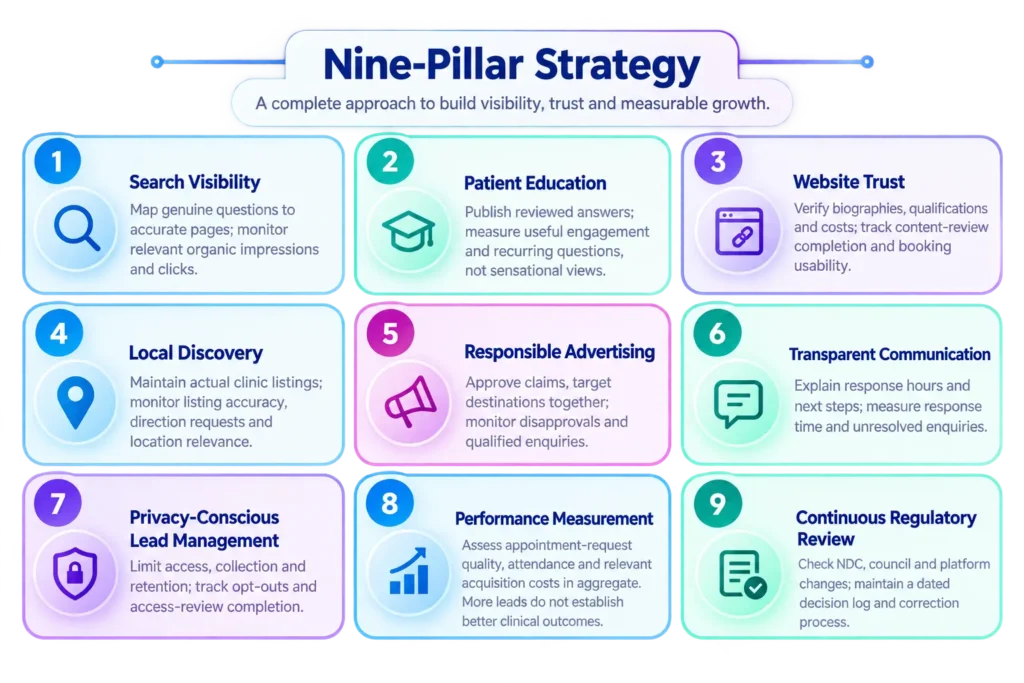
Use nine connected pillars, with named owners and a documented review process. Include dental advertising rules in India in the clinic’s periodic content audit:
1. Search visibility:
Map genuine questions to accurate pages; monitor relevant organic impressions and clicks.
2. Patient education:
Publish reviewed answers; measure useful engagement and recurring questions, not sensational views.
3. Website trust:
Verify biographies, qualifications and costs; track content-review completion and booking usability.
4. Local discovery:
Maintain actual clinic listings; monitor listing accuracy, directions requests and location relevance.
5. Responsible advertising:
Approve claims, targeting and destinations together; monitor disapprovals and qualified enquiries.
6. Transparent communication:
Explain response hours and next steps; measure response time and unresolved enquiries.
7. Privacy-conscious lead management:
Limit access, collection and retention; track opt-outs and access-review completion.
8. Performance measurement:
Assess appointment-request quality, attendance and relevant acquisition costs in aggregate. More leads do not establish better clinical outcomes.
9. Continuous regulatory review:
Check NDC, council and platform changes; maintain a dated decision log and correction process.
Start with an inventory of websites, ads, profiles, vendors and patient material. Correct misleading or exposed information before scaling. Review procurement arrangements as carefully as creative copy. [S1] [S3] [S6]
Dental Clinic Digital Marketing Compliance Checklist
This checklist supports DCI advertising guidelines for dentists review, but it is not a substitute for advice on a particular clinic or campaign.
Before launch, record evidence and an accountable reviewer for each area:
Website:
Real address, hours, services, fees and working booking links.
Google Ads:
Professional assessment, accurate availability, matching landing pages and permitted audiences.
Meta Ads:
Current policy review, neutral wording and appropriate creative/data settings.
Social media:
Genuine education; no disguised solicitation or boastful case stories.
Treatment content:
Qualified review, alternatives, limitations and no unsupported clinical promises.
Dentist credentials:
Verified registration, recognised qualifications and justified specialist titles.
Images/videos:
Rights, identification risk and professional purpose checked before use.
Patient consent:
Any necessary permission is specific, recorded and assessed independently of advertising permission.
Testimonials/reviews:
No fabricated, rewarded or misleading endorsements; confidential replies.
Data privacy:
Relevant notice, minimal collection, vendor controls, access and retention reviewed.
WhatsApp:
Documented opt-in, workable opt-out and approved Platform workflows where required.
Lead generation:
Contract reviewed for canvassing, referral commissions and fee splitting.
Promotional claims:
Evidence, material exclusions and fair presentation checked together.
Internal approvals:
clinical, Professional/legal and marketing sign-off recorded; dated copies retained.
These are operational checks derived from the frameworks discussed above. A dated checklist for DCI advertising guidelines for dentists can help teams record who reviewed each asset. They do not replace case-specific advice. [S3] [S9] [S11] [S20]
How Aivolv Can Help Dental Clinics Grow Their Digital Presence
A written dental clinic marketing regulations in India review can help align SEO, paid media and social publishing with the clinic’s approved scope.
Aivolv can scope its work around dental clinic marketing regulations in India, with clinical or legal review retained by the clinic where needed. Include dental clinic marketing regulations in India in recurring audits so later edits are reviewed too.
Aivolv’s published SEO services include technical SEO, local visibility and content development. These can support accurate pages, useful information and clearer local discovery. Its paid search services describe audits, campaign management, landing-page optimisation and analytics. [S24] [S25]
Its social media services include audits and campaign services. A dental brief should adapt these capabilities to professional restrictions and reviewed data practices. General agency offerings do not establish that every remarketing tactic is suitable for dentistry. [S26]
To discuss an appropriate scope, contact Aivolv with your clinic locations, services and existing channels. Keep the treating professionals and appropriate advisers involved in approval. This guide makes no claim of a dental-specific certification, guaranteed compliance or guaranteed patient growth. [S27]
Frequently Asked Questions — Dental Advertising & Digital Marketing India 2026
Can dentists advertise their clinics in India?
The historical Dental Council of India advertising rules should be read with the transition provisions and applicable current directions.
Yes, within professional limits. Regulation 8.1 contemplates advertising; factual listings and websites are expressly addressed in 8.2.8–8.2.9. Solicitation, misleading claims and self-aggrandisement remain restricted. [S3]
What are the DCI advertising rules for dentists?
Searches for DCI advertising guidelines for dentists commonly refer to the 2014 ethics code; confirm the current framework before relying on older summaries.
The relevant historical code is the Revised Dentists (Code of Ethics) Regulations, 2014, particularly 8.1–8.3 and 8.6. NDC now replaces DCI; use current terminology alongside historical search terms. [S1] [S2] [S3]
Which dental professional conduct regulations apply in 2026?
Does NMC regulate dental clinic advertising?
Can dental clinics run Google Ads?
Can dentists advertise on Instagram?
Can dentists use patient testimonials India?
Treat promotional reuse as high risk under the ethics code and October advisory. The question can dentists use patient testimonials India should be reviewed before selecting a quote, image or video. Reassess can dentists use patient testimonials India whenever the clinic plans to republish patient feedback on another channel. Consent and a genuine patient experience do not by themselves settle advertising permission. [S3] [S6]
Can dentists post before and after photographs?
Can dental clinics promote implants and aligners?
Factual information about available services is contemplated. Avoid universal suitability, unsupported outcomes and unverified specialist or brand-provider claims. Review each campaign. [S3]
Are discounts and dental treatment packages allowed?
Is SEO permitted for dental clinics in India?
Can dentists use influencers for clinic promotion?
Can dental clinics use WhatsApp marketing?
What information should a dental clinic website display?
. How can dental practices build online visibility ethically?
Maintain factual listings, publish reviewed educational information, improve website usability and protect patient information. Measure enquiry quality without promising rankings or treatment outcomes. [S3]
Can clinics advertise themselves as the “best dental clinic”?
What happens if a dentist violates applicable advertising rules?
Professional proceedings can lead to disciplinary action, including suspension or removal where legally authorised and after applicable process. Consumer-law and platform consequences are separate; there is no universal automatic penalty schedule. [S1, section 29] [S6] [S8]
Conclusion
A practical application of dental clinic digital marketing guidelines India 2026 starts with verified facts, responsible education and a documented review process.
Responsible dental marketing combines the current NDC framework, continuing ethics standards, relevant consumer and privacy law, and channel policies. Revisit dental clinic digital marketing guidelines India 2026 whenever the clinic changes its services, campaigns or patient information workflows. Build visibility through factual information, useful education and careful review. For help planning that work, contact Aivolv to discuss its verified digital marketing services.
Legal information disclaimer:
This article provides general information reviewed on 23 October 2026. It is not legal advice or campaign approval. Regulations, council directions and platform policies can change. Obtain qualified dental regulatory and privacy advice for your establishment and proposed activities before publication or launch.