You approach two creators about featuring your products. One is interested in receiving a selection from your collection. The other sends a rate card. Both could suit your brand, but the arrangements involve different expectations.
A barter collaboration exchanges products or services for agreed work. A fee-based partnership pays the creator for a defined scope. The choice between them means looking at the audience, production effort and what your business needs from the content.
Before sending products or accepting a quote, decide what a successful partnership would look like. It makes it easier to discuss an arrangement that works for both sides.
What Makes Reels and Carousels Different?
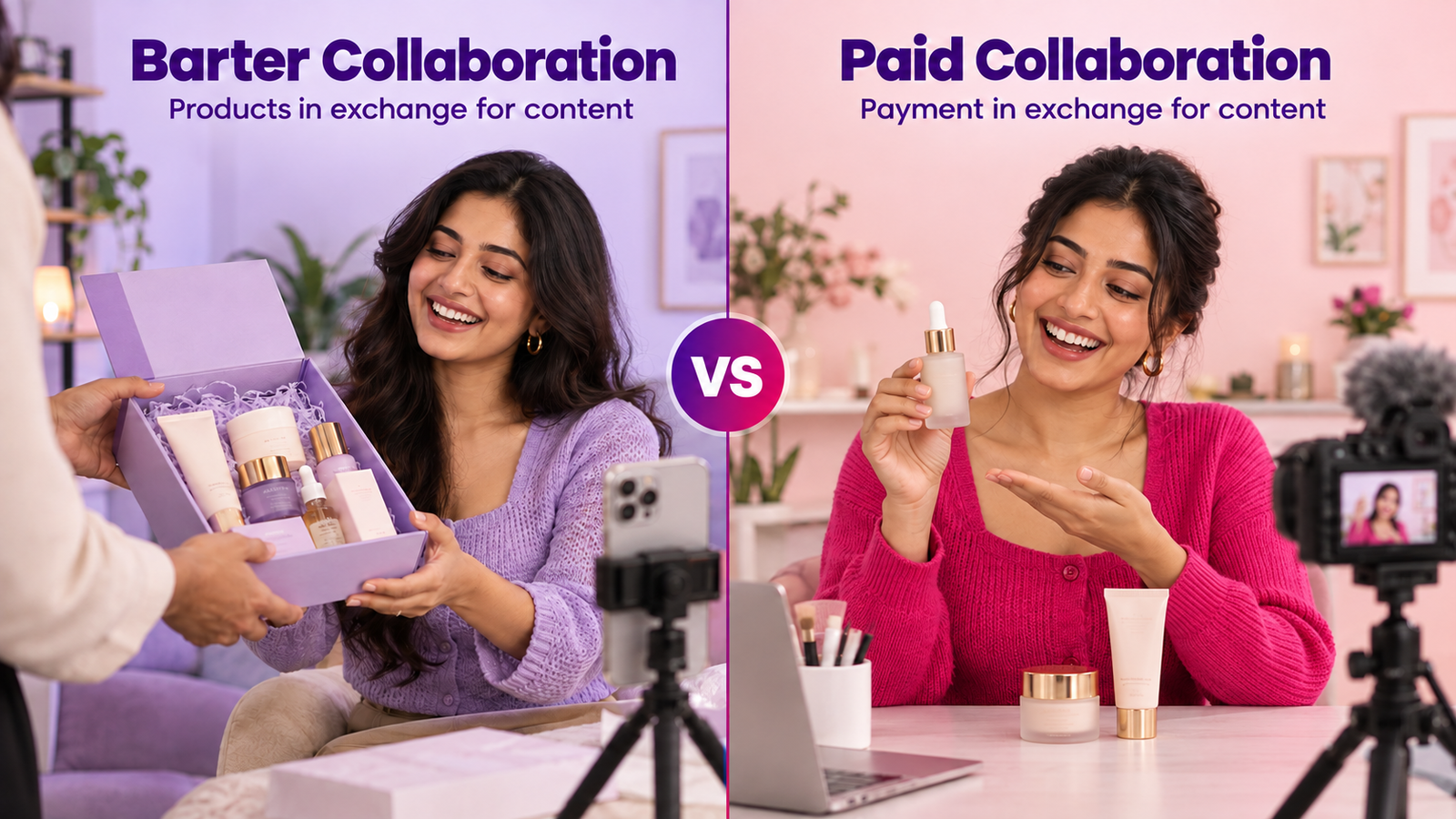
A Barter collaboration is an arrangement where a brand provides products or services in exchange for agreed content or promotional work.
For example, a jewellery brand might offer selected pieces to a fashion creator in exchange for a styling Reel. Both sides should confirm the items, content requirements and publishing timeline before anything is shipped.
It differs from sending an unconditional gift. Without a posting agreement, a brand should not assume that receiving a package creates a commitment to publish.
The exchange also carries costs. Products, packaging, delivery and staff time all belong in your campaign budget.
What Is a Paid Collaboration?
A paid collaboration involves a creator receiving money for agreed work. The scope might include filming, editing, publishing or a combination of these tasks.
For instance, a skincare business could commission a product demonstration with an agreed delivery date and review process. The fee compensates the creator for the specified work; it does not guarantee customer purchases.
Permission to reuse the video on your website or run it in advertisements should be discussed explicitly. Paying for a post does not automatically mean every possible use is included.
Barter vs Paid Collaborations: Key Differences
| Comparison point | Product or service exchange | Fee-based partnership |
|---|---|---|
| Compensation | The agreed products or services | An agreed fee, sometimes alongside products |
| Brand costs | Products, packaging, shipping and coordination | Creator fees, coordination and other campaign expenses |
| Deliverables | Defined before the exchange | Defined within the paid scope |
| Publishing timeline | Agreed by both parties | Agreed by both parties |
| Content reuse | Requires explicit permission | Requires explicit permission |
| Best starting question | Is the exchange worthwhile for both sides? | Does the quoted scope meet the campaign’s needs? |
When Can a Product Exchange Suit Your Brand?
The Creator Would Actually Use Your Product
Look for a natural connection between your offering and the creator’s existing content.
A jewellery collection may fit someone who regularly shares outfit combinations. The connection is less convincing if their audience follows them for an unrelated subject.
The Value Works for Both Parties
Your product’s retail price does not automatically determine its value to a creator. They may consider whether they want the item and how much time the requested content will take.
Discuss the exchange openly and accept that someone may prefer a fee.
The Requested Work Is Manageable
A limited brief may be easier to agree on than a request involving several videos, multiple locations and repeated revisions.
Avoid assuming that a creator with fewer followers should accept products as their only compensation. Their production time still has value.
When Should You Consider Paying a Creator?
The Content Requires Significant Production
Your Campaign Has Specific Commitments
A launch may require several assets, a coordinated publishing schedule and agreed review stages. A paid collaboration lets you negotiate compensation around that scope.
Payment alone does not prevent delays, so confirm responsibilities and contingency arrangements.
You Need Additional Usage Rights
You may want to use the content in advertising, publish it across brand channels or request category exclusivity.
Explain these requirements before accepting a quote. Discuss the channels, duration and permitted edits so both sides understand what is included.
How to Choose the Right Model for Your Brand
Define the Job Your Content Needs to Do
Start with a specific objective. Do you want customers to understand a product, visit a collection page or ask about a service?
Your influencer marketing brief should connect the requested content to that objective. “Create awareness” becomes more useful when you identify who needs to notice the brand and what they should learn.
Check Audience Fit Before Follower Count
A social influencer should be assessed for relevance as well as reach. Review their usual subjects, presentation style and the conversations their posts generate.
Consider their engagement rate alongside comment quality and audience relevance. Check how the figure is calculated before comparing creators.
Where available, ask for audience information relevant to your campaign. A large following is less useful if the audience is outside the locations you serve.
Choose Measures Before Publishing
For product education, useful questions and saves may help you understand audience response. Track engagement rate as one indicator of interaction, while considering whether those interactions support your campaign goal.
For a sales-focused campaign, consider relevant website visits, enquiries and purchases you can reasonably connect to the activity. Review these alongside your costs. Influencer marketing is easier to evaluate when the reporting plan is part of the original brief.
What to Agree Before Starting
Keep the essential details in a written agreement or clearly documented confirmation:
- Compensation: The products, services or payment provided.
- Deliverables: Content formats, quantities and publishing channels.
- Timing: Product delivery, draft submission and publication dates.
- Reviews: Who checks the content and how revisions are handled.
- Permissions: Where the brand may reuse the content and for how long.
- Reporting: Which results the creator will share and when.
- Changes: What happens if delivery is delayed or the campaign is cancelled.
Advertising disclosure also applies to product exchanges. In India, ASCI’s guidance includes free products and barter arrangements as material connections that require disclosure in promotional content. The disclosure should be prominent and easy to understand.
Plan Your Influencer Marketing With Aivolv
Finding a suitable creator is only the beginning. Outreach, briefing, timelines and performance review all need attention.
Aivolv supports brands with creator selection, partnership coordination and campaign tracking. Whether you are exploring product exchanges or planning a larger campaign, the starting point is a clear audience and a realistic scope.
Contact Aivolv to discuss your campaign goals, content requirements and available budget.