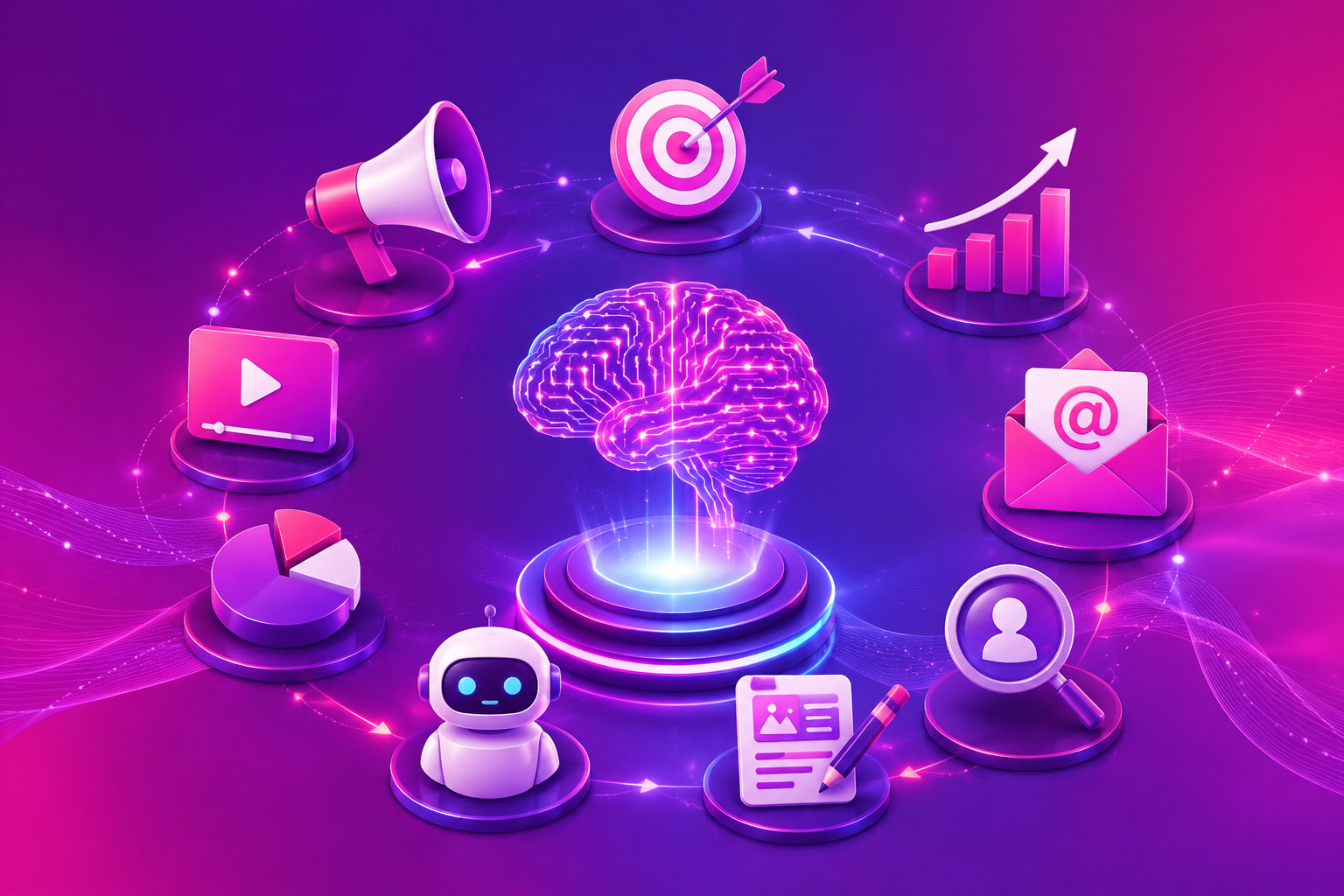
AI for Digital Marketing is changing the way businesses attract customers, build relationships, and grow online. Instead of spending hours going through spreadsheets, studying customer behavior manually, or guessing which campaign might work, marketers can now use AI to find useful patterns and make faster decisions.
But AI is not about replacing marketers. It is about giving them better tools to understand their audience, create more relevant campaigns, automate routine work, and spend more time on strategy and creativity.
1. Understand Your Audience Better
Good marketing starts with knowing who you are talking to. The more you understand your customers, the easier it becomes to create messages that actually connect with them.
AI can look at information such as website visits, search behavior, purchases, social media interactions, and engagement patterns. It can then identify trends that might take a marketing team much longer to discover manually.
For example, a business may learn that one group of customers is mainly interested in price, while another cares more about quality or convenience. These insights can help marketers create different messages for different audiences.
The role of AI in digital marketing becomes especially useful when a business has a large amount of customer data but does not have enough time to analyze every detail manually.
2. Create Better and More Relevant Content
Coming up with fresh content ideas every week can be challenging. Marketers need to research topics, understand what people are searching for, create outlines, write content, and keep everything consistent with the brand.
AI can make this process easier by helping with topic research, content ideas, keyword analysis, outlines, and personalization.
That does not mean marketers should simply publish whatever AI generates. The best content still needs human experience, creativity, opinions, examples, and a clear understanding of the audience.
With AI driven digital marketing, businesses can speed up their content workflow while still keeping their communication personal and authentic.
3. Improve Campaign Performance
A digital marketing campaign can generate thousands of data points. There are clicks, impressions, conversions, costs, engagement rates, audience segments, and many other metrics to consider.
Trying to make sense of all this information manually can be overwhelming.
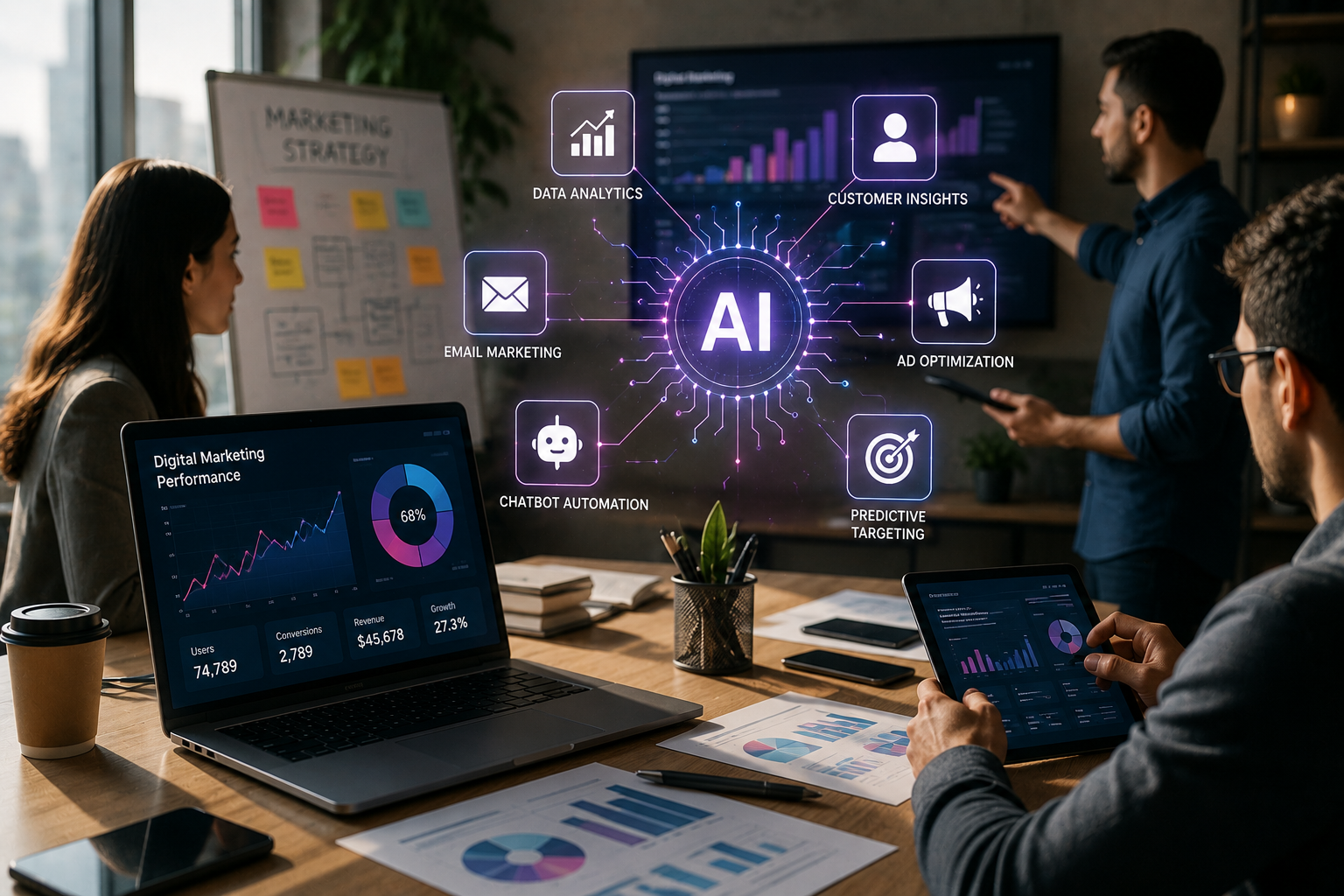
This is where AI performance marketing can make a real difference. AI can analyze campaign data and help marketers identify what is working, what is underperforming, and where changes may be needed.
For instance, if one audience is generating more qualified leads at a lower cost, marketers can use that information to adjust their strategy and make better use of their advertising budget.
4. Give Customers More Personalized Experiences
People are more likely to pay attention when marketing feels relevant to them. Nobody wants to receive the same generic message that thousands of other customers are seeing.
AI can help businesses personalize emails, website content, product recommendations, offers, and follow-up communication based on customer behavior.
The role of AI in digital marketing goes beyond simply collecting customer information. The real value comes from using those insights to make the customer experience more useful.
For example, someone who has already looked at a particular service on your website might be shown a helpful guide or a related offer instead of receiving a completely unrelated advertisement.
“AI can help you work smarter, but your ideas still matter. Use technology to understand your audience, improve your strategy, and create marketing that feels genuinely human.”
5. Make Paid Advertising More Effective
Running paid campaigns without proper targeting can quickly become expensive. Even a small amount of wasted advertising budget can add up over time.
AI can analyze campaign performance and help marketers understand which audiences, placements, creative formats, and messages are delivering better results.
With AI in digital advertising, businesses can test different ad variations and identify combinations that are more likely to attract attention and generate conversions.
However, technology should not be left to make every decision on its own. Marketers still need to review the messaging, creative quality, audience targeting, and overall campaign direction to make sure everything aligns with the brand.
6. Find Better SEO Opportunities
SEO is no longer just about finding a keyword and putting it into an article several times. Search engines and users increasingly expect content that genuinely answers questions and solves problems.
AI can help marketers discover related topics, understand search intent, identify content gaps, and organize large keyword lists.
For example, instead of targeting a broad topic with a single article, marketers can discover the specific questions customers are asking and create useful content around those questions.
This makes SEO more focused on the audience rather than simply chasing search volume.
7. Automate Repetitive Marketing Work
Not every marketing task requires human creativity. Reporting, organizing campaign data, segmenting audiences, monitoring performance, and managing repetitive workflows can take up a surprising amount of time.
AI can automate many of these routine activities, allowing marketers to focus on things that require human thinking.
For businesses using AI driven digital marketing, this can be particularly helpful for smaller teams. They can manage more campaigns and processes without spending their entire day on repetitive administrative work.
The result is not just greater efficiency. It also gives marketers more time to think about new ideas, customer needs, and long-term growth.
8. Build a Stronger Social Media Strategy
Social media moves quickly. What works today may not get the same response next month.
AI can help marketers analyze engagement patterns, identify popular content themes, generate ideas, understand audience reactions, and repurpose existing content for different platforms.
Still, there is something AI cannot completely replace: knowing what a brand should sound like.
People understand humor, emotions, cultural context, and relationships in ways technology cannot always replicate. That is why AI works best when it supports the creative team rather than trying to become the creative team.
The future of AI in digital marketing could make social media planning even more predictive, helping brands understand what types of content their audiences are likely to respond to.
9. Generate and Nurture Better Leads
Getting more leads is not always the same as getting better leads. A business may receive hundreds of enquiries but only a small percentage may actually be interested in buying.
AI can help analyze actions such as website visits, form submissions, email engagement, downloads, and previous interactions to identify prospects showing stronger buying intent.
This allows sales and marketing teams to focus their attention where it is most likely to make a difference.
AI-powered chat systems can also answer common questions and guide visitors toward useful information. When implemented thoughtfully, these tools can make the journey from first interaction to purchase smoother.
10. Make Smarter Marketing Decisions
Perhaps one of the biggest benefits of AI is the ability to turn large amounts of data into useful insights.
Instead of looking at dozens of separate reports, marketers can use AI to identify trends, compare campaign results, understand customer behavior, and spot potential opportunities.
AI performance marketing supports this approach by helping businesses connect marketing activity with actual outcomes.
The important part is not simply collecting more data. It is using that data to make better decisions. Marketers can test an idea, see what happens, learn from the results, and improve the next campaign.
Balancing AI for Digital Marketing With Human Creativity
The most successful AI strategies do not try to remove humans from the marketing process.
Marketing is ultimately about people. Understanding emotions, building trust, telling stories, developing creative ideas, and communicating a brand’s personality still require human judgment.
The role of AI in digital marketing should therefore be viewed as a supporting role. AI can handle analysis, automation, research, and repetitive processes, while marketers focus on strategy, creativity, relationships, and decision-making.
It is also important to review AI-generated information before it reaches customers. Facts should be checked, brand guidelines should be followed, and customer data should be handled responsibly.
Building a Future-Ready Marketing Strategy
Businesses do not need to adopt every new AI tool they come across. The better approach is to start with a real marketing problem and find out whether AI can help solve it.
Maybe your team spends too much time creating reports. Perhaps your advertising costs are increasing. Maybe your website is receiving traffic but generating very few leads. These are the kinds of problems where AI can provide practical value.
A company can use AI to understand its audience, improve advertising, automate reporting, personalize communication, or uncover new SEO opportunities.
The future of AI in digital marketing will likely bring even stronger connections between customer data, automation, personalization, analytics, and creative strategy. Businesses that combine these capabilities with human experience will be better positioned to adapt as customer expectations continue to change.
Frequently Asked Questions
What is AI for Digital Marketing?
AI for Digital Marketing refers to the use of artificial intelligence to analyze customer data, automate marketing tasks, personalize experiences, improve campaigns, and help businesses make more informed decisions.
How does AI performance marketing improve campaigns?
AI performance marketing helps marketers analyze campaign data, identify valuable audiences, optimize budgets, evaluate creative performance, and make adjustments based on actual results rather than assumptions.
What is the role of AI in digital marketing?
The role of AI in Digital Marketing includes analyzing customer behavior, supporting content creation, personalizing customer experiences, optimizing campaigns, automating repetitive tasks, assisting with SEO, and improving marketing analytics.
How can AI driven digital marketing help small businesses?
AI driven digital marketing can help small businesses save time, automate routine tasks, understand their customers, personalize campaigns and make better use of limited marketing resources.
What is AI in digital advertising?
AI in Digital Advertising means using artificial intelligence to analyze advertising data, improve audience targeting, optimize campaigns, test different creative variations, and identify opportunities to improve advertising performance.
How can businesses benefit from AI in digital advertising?
Businesses can use AI in digital advertising to better understand campaign performance, identify high-value audiences, optimize advertising spend and make faster decisions based on performance data.
What does the future of AI in digital marketing look like?
The future of AI in digital marketing is expected to bring more advanced personalization, predictive analytics, intelligent automation, real-time campaign optimization, and better connections between marketing activities and business results.